
StaminaLift Maintenance Plan: Protecting Your Hospital’s Safety Investment
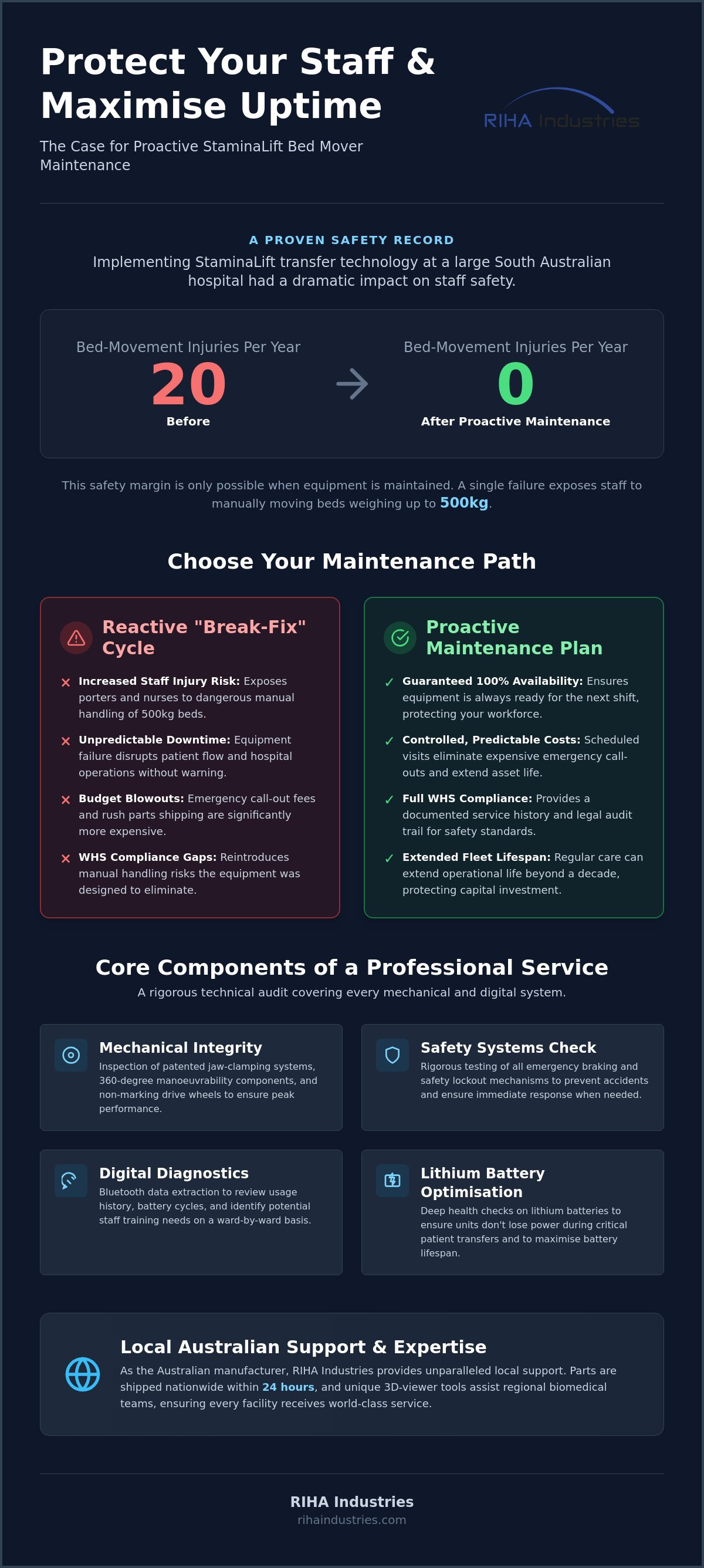
Did you know that a large South Australian hospital reduced bed-movement injuries from twenty per year to zero after implementing our transfer technology? It’s a powerful result, but that safety margin only holds if your equipment is in peak condition. When a machine fails, your staff are immediately exposed to the risk of moving beds that can weigh up to 500kg. Implementing a StaminaLift maintenance plan ensures you never have to choose between operational speed and staff wellbeing. We recognise the stress that unpredictable downtime and emergency repair costs place on hospital budgets and patient flow.
A structured service programme acts as a safety insurance policy for your entire fleet. By moving away from reactive repairs, you can guarantee 100% equipment availability for your porters and nurses while maintaining full compliance with Australian healthcare safety standards. This guide explains how preventative care protects your nursing staff from injury and significantly extends the lifespan of your capital investment. We will look at how local support and advanced diagnostics keep your facility moving without the threat of budget blowouts or equipment failure.
Table of Contents
What is a StaminaLift Maintenance Plan?
A StaminaLift maintenance plan is a comprehensive service agreement designed to transform how your facility manages its patient transport equipment. Instead of treating repairs as an afterthought, this structured programme ensures that every unit in your fleet, whether it's the StaminaLift TS5000 or the bariatric TS6000, remains in peak operational condition. RIHA Industries, as the Australian manufacturer, provides this support to bridge the gap between heavy-duty engineering and the daily safety needs of nursing staff. By committing to regular oversight, hospitals move away from the high-stress "break-fix" cycle and toward a model of predictable performance and controlled costs.
Preventative vs. Reactive Maintenance
Waiting for a mechanical failure before calling a technician is a gamble with staff safety. When a bed mover sits idle due to a preventable fault, orderlies are often forced to move beds weighing up to 500kg manually. This directly contradicts fundamental Work Health and Safety (WHS) principles, as it reintroduces the very manual handling risks the equipment was purchased to eliminate. Reactive maintenance isn't just a safety hazard; it's a budget killer. Emergency call-out fees and the loss of productivity during downtime far outweigh the cost of a scheduled visit. A proactive plan ensures your equipment is always ready for the next shift, providing a reliable safety net for your workforce.
The Scope of Modern Bed Mover Support
A modern StaminaLift maintenance plan covers far more than just tightening bolts. It involves a sophisticated assessment of mechanical, electrical, and software systems to ensure the equipment performs as intended. Technicians perform deep health checks on the 360-degree manoeuvrability that makes these machines so effective in tight hospital corridors. This scope includes:
Safety Systems: Rigorous testing of emergency braking and safety lockout mechanisms to prevent accidents.
Mechanical Integrity: Inspection of the patented jaw-clamping systems used in the 2100 and 5000 models to ensure secure bed attachment.
Diagnostics: Utilising Bluetooth diagnostics to review usage history and identify if certain wards require additional staff training.
Battery Optimisation: Monitoring lithium battery health to ensure the unit doesn't lose power during a critical patient transfer.
For regional facilities, RIHA Industries utilises unique 3D-viewer tools to assist in-house biomedical teams, ensuring that even remote wards receive world-class support. This local, Australian-made expertise means parts are shipped within 24 hours, keeping your safety investment protected regardless of your location. It's about more than just fixing machines; it's about guaranteeing a safe environment for every staff member and patient.
Core Components of a Professional Service Agreement
A professional service agreement is far more than a simple visual check. It is a rigorous technical audit that ensures every mechanical and digital system operates at the manufacturer's original specification. When hospitals invest in a StaminaLift maintenance plan, they are securing a structured regime that covers high-wear components and complex electronics alike. This proactive approach is backed by research showing the significant ROI of a service contract, where the costs of planned maintenance are offset by the prevention of catastrophic equipment failure and the associated worker compensation claims.
Mechanical Integrity and Jaw Mechanism Testing
The "connect and lock" jaw system is the heart of the StaminaLift TS5000 and TS6000 models. During a professional inspection, technicians verify the clamping pressure and structural integrity of these jaws to ensure a secure, slip-free attachment to hospital beds. We also focus on the lubrication and recalibration of the 360-degree turning components. This precise adjustment allows for the effortless movement nurses rely on in high-pressure wards. Additionally, we inspect the non-marking drive wheels to ensure they remain free of debris and flat spots, which protects the integrity of hospital floor centres and maintains the smooth, silent operation required in patient areas.
Digital Diagnostics and Bluetooth Integration
One of the most overlooked aspects of equipment care is the digital health of the machine. Our technicians use Bluetooth connectivity to extract detailed usage history and battery cycle data from each unit. This information is invaluable for biomedical engineering teams who need to track fleet performance across large campuses. By analysing this feedback, we can identify specific wards where staff might require additional training, perhaps due to improper charging habits or high-impact usage patterns. This level of insight allows for a more targeted approach to preventative maintenance and repairs, ensuring that software is always updated to the latest drive program recalibrations.
A professional plan also prioritises the health of lithium batteries. We perform deep-cycle tests to guarantee that your power source won't fail during a long shift. Because RIHA Industries is the Australian-made manufacturer, our service agreements provide priority access to genuine replacement parts. This eliminates the long wait times often associated with imported equipment, as parts are shipped within 24 hours to keep your fleet operational. By maintaining these core components, you ensure that the machine's safety lockout and emergency braking systems remain fully functional, providing peace of mind for every porter and nurse on the floor.
WHS Compliance and Risk Mitigation in Australia
In Australia, workplace health and safety isn't just a best-practice recommendation; it's a strict legal mandate. For hospital administrators, the primary goal is to eliminate the manual handling risks associated with patient transport. However, simply providing a bed mover isn't enough to satisfy regulatory requirements. A documented StaminaLift maintenance plan serves as a critical component of your facility’s risk management strategy, providing a clear legal audit trail that proves the equipment was safe for use at the time of any potential incident.
Musculoskeletal injuries remain a leading cause of workers' compensation claims in the Australian nursing sector. When a machine like the StaminaLift TS5000 is used to move a 500kg load, the mechanical integrity of its braking and steering systems is paramount. Leading health organisations emphasise the importance of routinely maintaining safe patient handling technology to prevent these injuries. By adhering to a manufacturer-sanctioned service schedule, hospitals can significantly reduce their liability and demonstrate a commitment to staff wellbeing that goes beyond the initial purchase. This is particularly vital for FDA-registered equipment used in acute care environments where patient and staff safety are inextricably linked.
Eliminating the Risk of "Solar Cowboy" Repairs
Using non-genuine parts or unqualified technicians, often referred to as "solar cowboy" repairs, poses a severe threat to OHS compliance. This risk is particularly acute with the TS6000 model, which is engineered for a 900kg push/pull capacity during bariatric transfers. A failure in a non-genuine component under such extreme loads could lead to catastrophic injury. Only manufacturer-backed service ensures that every bolt and circuit board meets the original engineering standards, keeping the machine's safe working load (SWL) verified and legal. We ensure that every repair uses genuine Australian-made parts, which are shipped within 24 hours to maintain the integrity of your safety investment.
Support for Rural and Regional Facilities
Safety standards shouldn't depend on a hospital’s postcode. RIHA Industries ensures equity of safety for staff in remote areas through innovative support tools. Our unique 3D-viewer tool allows in-house biomedical teams in regional centres to perform complex maintenance with virtual guidance from our experts. This is supported by national phone assistance and online help, ensuring that regional bio-med teams have the same level of technical confidence as those in metropolitan hubs. By providing these resources, we help facilities maintain their StaminaLift maintenance plan regardless of geographic isolation, ensuring every nurse is protected by equipment that is fit for purpose and fully compliant with national standards.
Calculating the ROI of a Bed Mover Service Contract
Investing in a StaminaLift maintenance plan is an exercise in asset preservation. While the initial purchase of a powered bed mover represents a significant capital outlay, its long-term value is determined entirely by its operational uptime. By committing to a structured service agreement, hospitals can realistically extend the functional life of their fleet beyond a decade, deferring the significant costs associated with premature replacement. This proactive approach eliminates the financial shocks of emergency repair call-outs and the hidden expenses of hiring temporary equipment when a unit fails during a peak period. It transforms an unpredictable expense into a manageable, fixed operational cost.
The financial benefits also extend to the resale and trade-in value of your hospital assets. Equipment that has a verified, manufacturer-backed service history commands a higher value when it comes time for fleet upgrades. By maintaining the mechanical integrity and aesthetic condition of your machines, you're effectively lowering the total cost of ownership over the life of the product. It's a strategy that moves your facility away from the "break-fix" mentality and toward a model of sustainable, long-term efficiency.
Preserving Staff Retention and Morale
Reliable machinery is a cornerstone of nurse satisfaction and retention. When equipment becomes temperamental or breaks down, staff often revert to manual pushing to maintain patient flow, which leads to physical burnout and increased work-cover claims. We've seen that a consistent bed mover maintenance service supports long-term career longevity by ensuring nurses never have to risk their musculoskeletal health. It's far more cost-effective to maintain a machine than it is to recruit and train a new staff member due to avoidable workplace injuries. Protecting your staff is the most significant return on investment any hospital can achieve.
Optimising Fleet Utilisation
A professional maintenance contract ensures every unit is available when the ward is at its busiest. By analysing the Bluetooth diagnostic data collected during a service, facility managers can balance the workload across the entire fleet, preventing certain units from being over-utilised while others sit idle. This data-driven approach also allows you to maximise the 20% performance boost found in lithium battery upgrades, ensuring your porters have the power they need for an entire shift. This level of oversight ensures that no machine becomes a bottleneck in your patient transport system.
If you want to move away from unpredictable repair bills and protect your hospital's budget, you can request a comprehensive fleet assessment from RIHA Industries to see how a tailored plan fits your facility's specific transfer volumes.
Securing Your Fleet: Getting Started with RIHA Industries
Transitioning from a reactive "break-fix" cycle to a structured StaminaLift maintenance plan is a straightforward process designed to provide immediate relief to facility managers. The journey begins with a comprehensive fleet audit, where our technicians establish a safety baseline for every unit. This initial assessment identifies hidden wear and tear that might lead to future failures, ensuring that your equipment is brought up to manufacturer specifications before entering a regular service cycle. By establishing this baseline, you create a predictable environment where equipment availability becomes a guarantee rather than a variable.
Every healthcare facility has unique demands, so we customise service frequency based on your specific transfer volumes and hospital size. A high-traffic metropolitan trauma centre may require quarterly inspections, while a smaller regional ward might find a semi-annual cycle sufficient. This tailored approach ensures you aren't paying for unnecessary visits while still maintaining 100% compliance with national safety standards. Our national service network provides coverage across Australia, ensuring that expert support is never out of reach for your biomedical engineering team.
Why Partner Directly with the Manufacturer?
Partnering with RIHA Industries gives you a direct line to the experts who designed and built your equipment. Because we operate from our Edinburgh North facility, we guarantee 24-hour shipping on genuine parts, eliminating the long lead times associated with international suppliers. This direct access ensures your StaminaLift Transfer System 5000 remains at peak performance throughout its entire operational life. You aren't just hiring a technician; you're gaining a long-term partner dedicated to the safety of your nursing staff and the efficiency of your patient transport systems.
Requesting a Service Consultation
Taking the first step toward a safer facility is as simple as organising a site visit or a virtual fleet assessment. For regional hospitals, we utilise our 3D-viewer tool to conduct remote evaluations, allowing us to identify maintenance gaps without the delay of travel. During this consultation, we help you evaluate your current hospital porter equipment to see where preventative care can most effectively reduce injury risks. Once the assessment is complete, we provide a tailored maintenance proposal that aligns with your budget and operational goals. Protecting your safety investment starts with a conversation about how we can best support your team on the ground.
Guaranteeing Long-term Safety and Operational Excellence
A hospital’s ability to provide safe, efficient patient care depends on the reliability of its infrastructure. By moving beyond reactive repairs, you ensure that your staff are always supported by equipment that meets the highest engineering standards. A proactive service strategy provides the necessary legal audit trail for WHS compliance while simultaneously protecting your budget from the high costs of premature equipment replacement. It’s about creating a sustainable environment where nurses and porters can focus on patient outcomes without the physical burden of manual handling.
RIHA Industries offers national Australian service coverage and 24-hour worldwide shipping on all genuine parts to keep your facility moving. Our FDA-registered and Australian-made quality ensures that your investment is backed by the very people who designed the system. Enquire about a StaminaLift maintenance plan for your facility to secure a tailored assessment that fits your specific ward requirements. We’re here to help you build a safer, more resilient workplace for your entire team.
Frequently Asked Questions
How often does a StaminaLift bed mover require professional servicing?
Professional servicing is typically recommended every 6 to 12 months, depending on the specific transfer volume and environment of your facility. High-traffic acute care wards often require semi-annual checks to ensure the mechanical integrity of the jaw-clamping systems remains at peak performance. Regular inspections allow our technicians to identify minor wear before it results in equipment failure or a compromise in staff safety.
Can our in-house biomedical engineering team perform the maintenance?
Your in-house biomedical engineering team can certainly perform maintenance, and we actively support this through our technical resources. We provide access to national phone assistance and our unique 3D-viewer tool to guide your team through complex procedures. However, many facilities choose to supplement in-house work with a professional StaminaLift maintenance plan to ensure they have a verified manufacturer audit trail for WHS compliance.
Are replacement parts for older StaminaLift models still available?
Replacement parts for older models remain readily available through our national distribution network. Because RIHA Industries is the original manufacturer, we maintain a comprehensive inventory of genuine components for our legacy machines. We guarantee 24-hour shipping on all parts from our Australian facility, ensuring that even your older fleet units don't face extended downtime due to sourcing issues.
What happens if a machine breaks down between scheduled service visits?
If a unit fails between scheduled visits, facilities with a service agreement receive priority repair support to restore fleet availability quickly. Our national service network is designed to respond rapidly to emergency call-outs, minimising the time your staff spend without motorised assistance. We also provide immediate remote troubleshooting via phone or our 3D-viewer tool to help your on-site team resolve minor issues without delay.
Does a maintenance plan cover battery replacements and software updates?
A comprehensive StaminaLift maintenance plan includes lithium battery health monitoring and the latest software drive program recalibrations. We use Bluetooth diagnostics to track battery cycles and usage history, ensuring your power source is always reliable for a full shift. While the plan covers the labour for monitoring and updates, specific hardware replacements like new battery packs are managed according to your tailored service agreement terms.
How does regular maintenance affect our hospital’s WHS compliance status?
Regular maintenance is the cornerstone of maintaining your hospital's WHS compliance status for motorised patient handling equipment. By keeping a detailed log of professional inspections, you create a robust legal audit trail that proves your equipment is fit for purpose. This documentation is vital for risk mitigation, as it demonstrates a proactive approach to preventing musculoskeletal injuries among nursing staff and porters.
Is the 3D viewer tool included in the maintenance support package?
The 3D viewer tool is a standard component of our support package, particularly for rural and regional facilities. It allows your on-site technicians to view high-definition mechanical assemblies and receive virtual guidance from our engineers in real-time. This tool ensures that geographical isolation doesn't prevent your facility from accessing world-class technical expertise and maintaining the same safety standards as metropolitan hospitals.
Can we customise a service contract for a mixed fleet of 2100 and 5000 models?
You can easily customise a service contract to cover a mixed fleet of 2100, 5000, and 6000 models. We recognise that different wards have different equipment needs and varied transfer frequencies. Our team works with you to design a plan that balances the specific servicing requirements of each model, ensuring every machine in your facility receives the appropriate level of preventative care.


