Compare Lift Options for Patient Transfers in Small Spaces
The narrowest lift isn’t automatically the right choice for a confined room. With patient transfer equipment for small spaces, width is often the limiting factor, while the person’s ability to bear weight helps determine whether a sit-to-stand or full-body lift is more suitable. Hydraulic and electric lifts also operate differently, so compare their fit alongside mobility needs, portability and storage.
A tight transfer area can make everyday movement harder for the person receiving care and the staff supporting them. The right equipment should match the transfer task and available space, not just one feature in isolation. This guide compares hydraulic, electric, sit-to-stand and full-body lifts, including how each relates to mobility and weight-bearing ability, and what to consider when assessing narrow spaces, moving equipment and storing it between uses. You’ll come away with a practical way to narrow the options around the person’s needs and the room layout.
Table of Contents
Hydraulic, electric, sit-to-stand, and full-body lifts
The right lift depends on how much the person can participate and how much room the transfer requires. For a transfer board or pivot aid, first match the aid to the person’s mobility, then position it for the specific transfer and available clearance.
Electric lifts
An electric lift uses powered controls to raise or lower a person during a transfer. A hydraulic lift, by comparison, uses a manual pumping mechanism. In a small room, assess the complete device footprint and the space needed to position and manoeuvre it, not just the lift’s height or weight capacity.
Full-body lifts
A full-body lift supports the person in a sling while they move between positions. It suits transfers where the person cannot bear weight or safely assist with moving; a sit-to-stand device instead relies on the person participating in a supported standing transfer. The sling, lift position and available clearance all affect how the device can be used in a confined room.
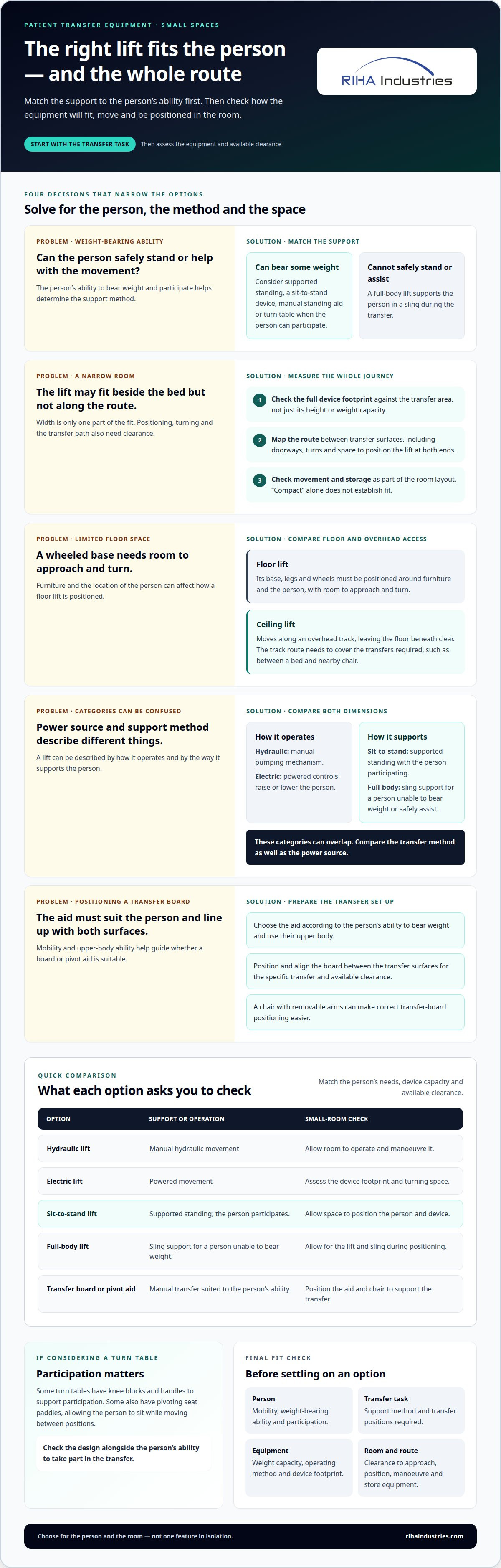
Hydraulic and electric describe how a lift is operated; sit-to-stand and full-body describe the type of support provided. These categories can overlap, so compare the transfer method as well as the power source. Check the person’s weight against the device’s weight capacity, then consider whether the lift can be positioned and turned within the room.
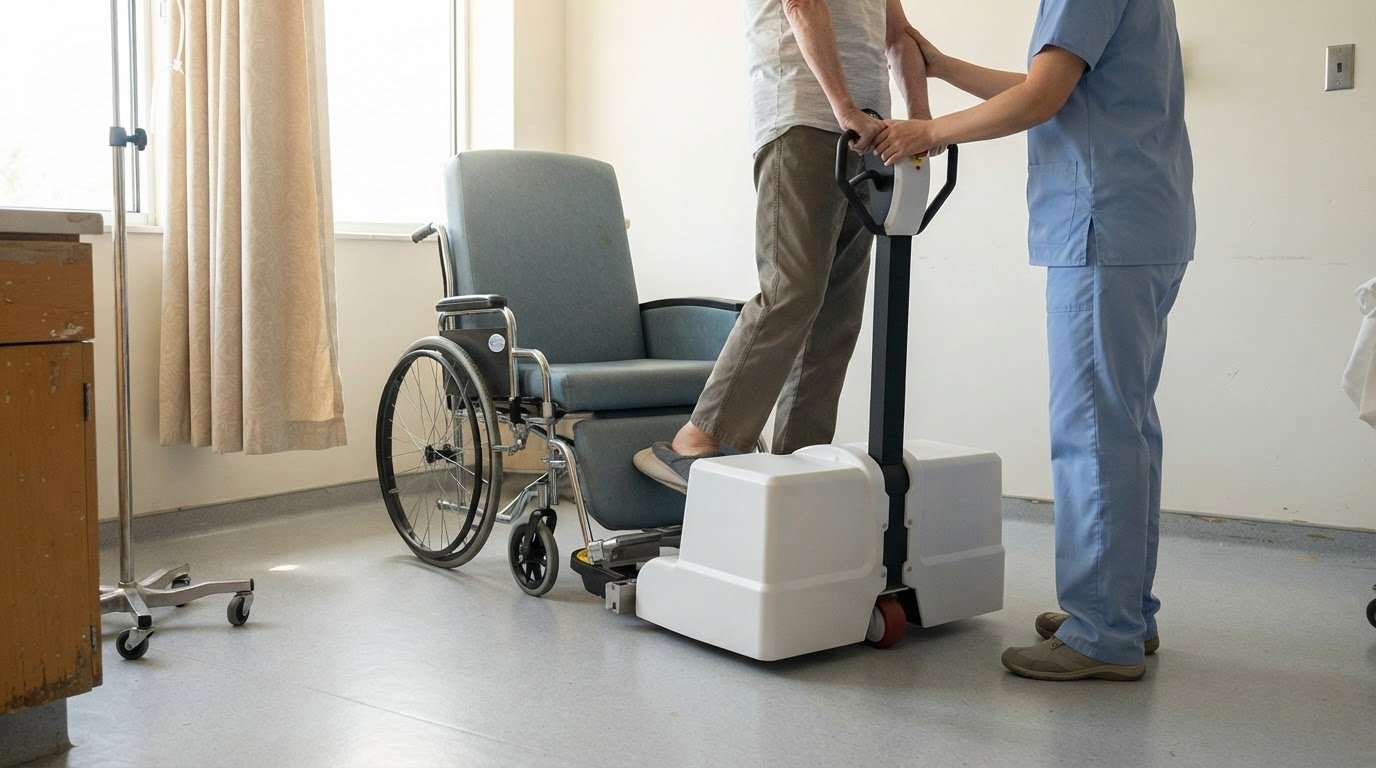
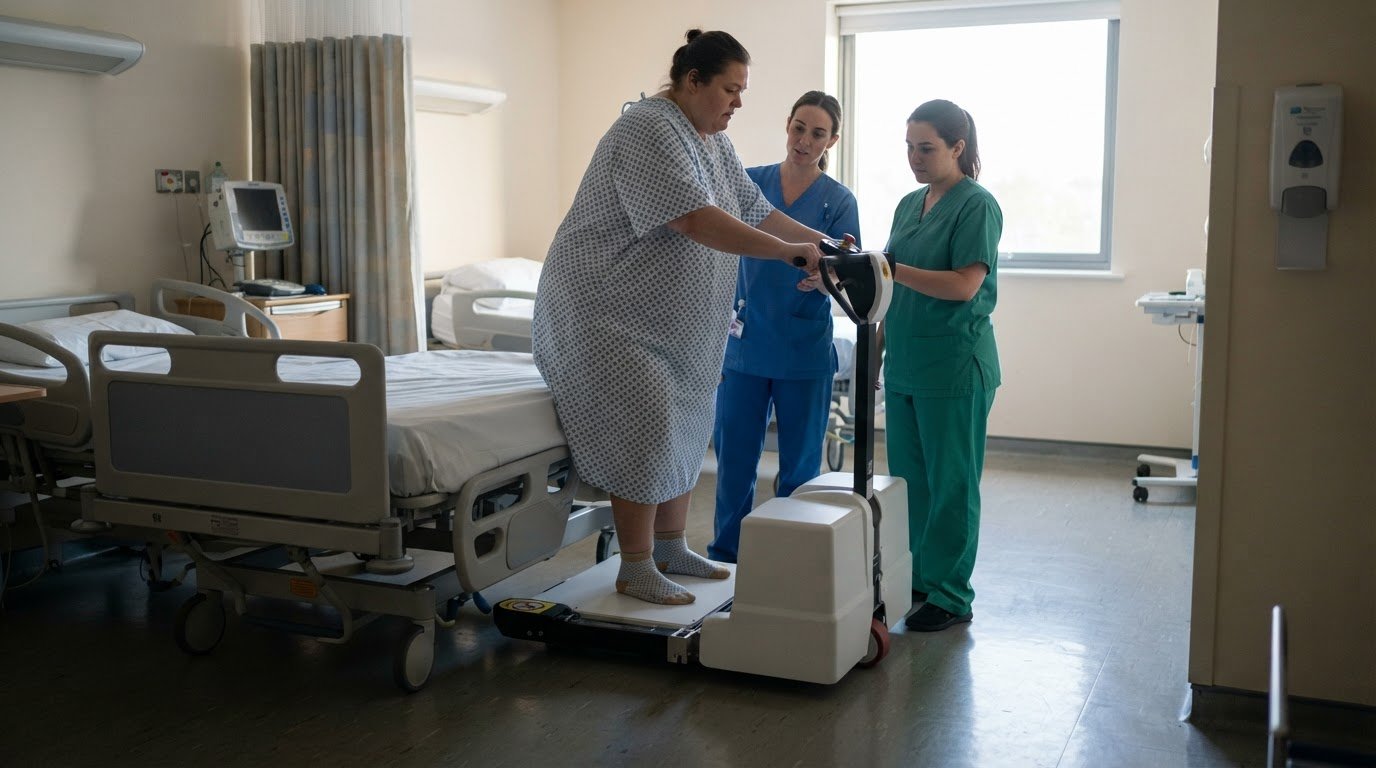
Standing and sit-to-stand transfer devices suit people who can bear some weight and contribute to the movement. Some turn tables have knee blocks and handles to support participation; some also have pivoting seat paddles, allowing the person to sit while moving between positions. These features make the device’s design and the person’s ability important selection criteria.
Compact sit-to-stand lifts may suit home transfers where room to manoeuvre is limited, but “compact” alone doesn’t establish fit. Compare the device width with the route and transfer area, and consider how the person will be positioned. A manual standing aid or turn table may be another option when the person can participate; a full-body lift is more appropriate when they cannot safely stand or assist.
For a transfer board, a chair with removable arms can make correct positioning easier. Choose the aid according to the person’s ability to bear weight and use their upper body, then align the board between the transfer surfaces. To choose between lift types, match support needs first, then check weight capacity, operating method and available clearance.
What Is a Patient Lift Transfer Device?
A patient lift transfer device supports movement between positions, such as a bed and chair, with less manual lifting by caregivers. For a home transfer, compare the lift’s route, support method and footprint with the path between rooms, not just the space beside the bed.
A ceiling lift moves along an overhead track, leaving the floor beneath it clear for a wheelchair or caregiver. The track’s route determines which transfers it can support, such as moving between a bed and a nearby chair. A floor lift, by contrast, has a base that must be positioned around furniture and the person. Its legs and wheels need room to approach and turn.
That difference matters in a compact bedroom. A floor lift may need to pass the bed, align with the person and move towards the destination without being blocked by a bedside table. A ceiling lift avoids a wheeled base on the floor, but depends on an overhead track covering the transfer path. The room layout and transfer surface locations help determine which approach is practical.
For home transfers, map the full route from bed to chair or bathroom. Include doorways, turns and the space needed to position the lift at both ends. An adjustable lift may accommodate different transfer positions, while a bariatric option is intended for different weight-capacity needs. Match the equipment’s stated capacity to the person’s weight and the task.
Electric and hydraulic describe how a lift’s movement is powered. An electric lift uses powered controls; a hydraulic lift uses a manual mechanism. Neither label alone tells you whether a model will suit a narrow room. Compare the base or overhead track, the operator’s position and the space needed to approach the person. Assistive transfer devices can support short-term rehabilitation or longer-term use at home or in care settings.
Medicare or private insurance coverage depends on the plan’s equipment category, eligibility criteria and supporting documentation. Requirements vary by payer, so the relevant plan terms determine whether a particular lift is covered.
In the United States, the applicable safety requirements depend on the equipment and care setting. For practical use, follow the lift manufacturer’s instructions and the facility’s transfer procedures, including guidance on positioning and operation.
Caregivers should be trained to use the chosen aid, and the transfer plan should identify the appropriate sling and size for a hoist. It should also specify how many staff are needed for the person and transfer. Before use, confirm that the device is within its service date and that the person is below its safe working load.
In a cramped room, a blocked route can prevent the lift from reaching the person or destination. Poor positioning can also make sling placement and controlled movement harder. Clear obstacles, plan the approach and destination, and ensure staff have enough room to assist without reaching around furniture.
For a floor lift, assess its full route and turning space; for a ceiling lift, assess whether the overhead track covers the required transfer path. These practical checks help match the equipment to the room. Patient transfer systems can be considered where a planned transfer needs an integrated equipment approach.
Choosing equipment based on mobility and weight-bearing ability
Start with the transfer the person needs, then match equipment to their current mobility and ability to bear weight. A person who can partly support their own weight may use a transfer belt, while someone unable to bear weight may need a hoist. The person’s weight and the device’s stated capacity also matter.
Transfer belts are recommended for people who can partially support their own weight but need help moving between positions. They give a caregiver a point of contact during transfers, such as moving from a chair to a bed. A belt isn’t a substitute for a lift when the person cannot safely stand or participate. Choose the aid according to what the person can do during that specific movement.
For a person who can stand with assistance, consider whether a standing aid supports the transfer they need. Their ability to maintain a standing position and follow the movement affects the equipment choice. If they cannot bear weight or safely assist with moving, a hoist provides a different type of support. Don’t base the decision on a diagnosis alone; consider their functional ability for the planned transfer.
Weight capacity is a separate selection criterion from mobility. This is a general range, not a substitute for checking the specific device’s safe working load. Compare the person’s weight with that capacity, and consider the equipment’s intended transfer task. Bariatric alternatives are available when standard equipment does not suit the person’s weight needs.
Use this sequence to narrow the options:
Identify the transfer, such as bed to chair or chair to toilet.
Assess whether the person can bear weight, stand, and assist with movement.
Match that ability to a transfer belt, standing aid, slide board or hoist.
Check the device capacity against the person’s own weight.
Confirm that chairs, the transfer platform and the equipment can be positioned for the planned movement.
A slide board may help someone who cannot stand but has good upper-limb and trunk strength. A transfer belt may suit someone with partial weight-bearing ability. A hoist is used when the person cannot bear weight or safely assist. These distinctions make mobility assessment central to equipment selection, rather than treating every transfer as the same task.
Battery operation does not determine whether a lift suits a person’s mobility; it describes how the lift is powered. Likewise, capacity alone doesn’t show whether someone can participate in a transfer. Consider both factors together: the person’s ability and the lift’s stated limit. For a specific transfer, choose equipment that supports the person’s weight and the level of assistance they need.
Patient lift portability and storage
A portable lift must fit both the transfer route and the storage space between uses. Before choosing a model, map how it will move from storage to the bed, chair or other transfer surface. Include doorways, turns and furniture along the route. A lift that fits beside a bed may still be difficult to manoeuvre through a narrow doorway.
Compare the lift’s footprint, handles and any parts that need positioning during transfers. Handles can help caregivers guide equipment, but the room still needs enough clear space to move and turn it. For example, measure the path from a bedroom corner to a chair, then consider where the lift can be parked without blocking access. A compact design can help, but the whole route matters.
Storage planning also includes slings. A hoist care plan should specify the appropriate sling and size. Keep the sling with the equipment or in a clearly identified place, so caregivers can find the prescribed option before a transfer. Separate storage can keep the sling accessible without leaving it across a walkway or on a chair needed for the transfer.
Rental versus purchase depends partly on how long and how often the equipment is needed. Renting may suit a temporary rehabilitation need; purchasing may make more sense when transfers are part of ongoing care. In either case, plan where the lift will be stored and who will assist during transfers. Short-term access does not remove the need to consider the route, sling and storage area.
Patient lift prices depend on the case and are given after a quote request; cost factors include lift type, capacity, configuration and sling requirements. Compare the complete equipment arrangement rather than considering the lift alone. A compact unit may still need space for its sling, controls or other components when stored.
Use these steps to assess portability and storage:
Measure doorways, turns and the route between storage and transfer locations.
Choose a storage position that keeps the equipment accessible without obstructing movement.
Identify the sling specified for the hoist and a practical place to store it.
Consider whether caregivers can move and position the lift in the available space.
A clear storage plan can support smoother transfers and preserve room for daily activities. For example, storing a lift outside a narrow bedroom may keep the walkway open, but only if caregivers can bring it to the bed when required. Consider portability, storage and assistance together, so the equipment can be positioned for the transfer without creating a new obstacle.
Patient transfer equipment for narrow spaces
In a confined room, equipment width and the transfer route can matter more than the device’s weight limit. Assess the space between furniture, the wheelchair approach and the caregiver’s position before choosing an aid. A lift that fits beside the bed may still be difficult to turn towards a chair.
Measure the narrowest part of the route, then consider where the person and equipment need to move. Include the approach to the bed, the gap beside the destination chair and any turn between them. Transfer aids have weight limits, but their width is normally the limiting factor; bariatric alternatives are available when capacity is the concern.
Transfer boards, slide sheets and pivot discs support different movements. A board bridges two transfer surfaces, such as a bed and wheelchair, while a low-friction slide sheet helps fabric layers roll or slide during repositioning. A pivot disc supports turning between positions, so it needs enough floor space for the person and caregiver to maintain their positions.
To transfer with a board or pivot aid in a small room, first position the wheelchair close to the destination surface and clear the route. Align the board between the surfaces, or place the pivot aid where the person can use it. The person’s ability to participate and the available space guide which aid suits that transfer.
A wheelchair or chair with removable arms can make it easier to position a transfer board correctly. This helps when a fixed armrest blocks the board’s path. Check that the transfer surfaces align and that the wheelchair can approach without hitting nearby furniture. The person also needs enough room to use their upper body during a board transfer.
Slide sheets can help when the task involves repositioning rather than moving between a bed and chair. Their specially designed, low-friction inner surfaces allow the fabric layers to roll or slide. In a narrow room, arrange the sheet and caregiver positions before starting, so furniture doesn’t obstruct movement. A transfer board is a different option for bridging surfaces.
For a pivot disc, consider whether the person can stand and participate in turning. Some turn tables have knee blocks and handles to support participation, while others include pivoting seat paddles for moving between positions while seated. These features differ from a board’s bridging function and a slide sheet’s repositioning role.
Use this room check before selecting an aid:
Identify the transfer, such as bed to wheelchair or repositioning in bed.
Check the narrowest route and the space around both transfer surfaces.
Match the aid to the person’s ability to participate.
Position the equipment without blocking the caregiver’s working space.
Choose the aid that fits the transfer task and the room layout, rather than selecting by one feature alone. To consider engineered options for planned patient transfers, explore patient transfer system options.
RIHA Industries: StaminaLift Transfer System 5000
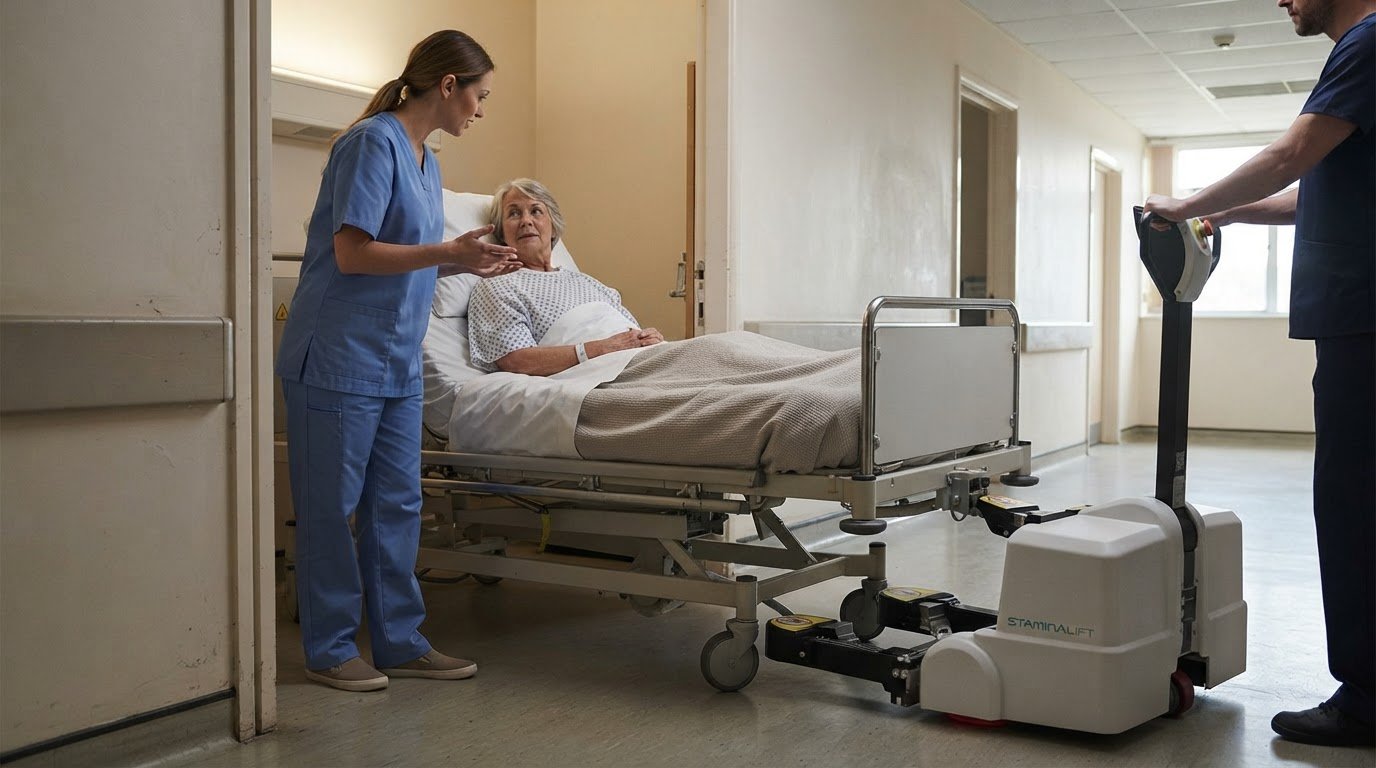
RIHA Industries’ StaminaLift Transfer System 5000 is an option to consider when planning patient transfers around existing hospital equipment. Its product range also includes the StaminaLift Transfer System 6000 and StaminaLift 2100 Bed Mover, designed to integrate with existing hospital equipment.
For a healthcare setting with restricted space, use the earlier comparison criteria to frame your assessment: the person’s mobility and weight-bearing ability, the transfer route, and the room available to position equipment. These factors clarify the transfer task and the equipment arrangement to consider, without assuming one lift suits every layout.
Contact RIHA Industries to discuss the StaminaLift Transfer System 5000 and its role in your patient transfer setup.
Plan the next transfer with confidence
Turn your equipment comparison into a practical plan for the room and the people using it. Choose a regular transfer, then map the steps from preparation through arrival at the destination. Note where staff need to stand, what needs to move, and how the person can take part. This makes the priorities for patient transfer equipment for small spaces clearer before you make an equipment decision.
Bring that plan into a conversation with RIHA Industries. A clear account of the transfer task and setting can focus the discussion on relevant transfer equipment, rather than features that don’t address your day-to-day needs. The aim is a solution that fits the care environment and supports a considered approach to movement.
Contact RIHA Industries about transfer equipment to discuss your requirements. With a clear plan and the right support, you can take the next step towards more considered patient transfers.
Frequently Asked Questions
What patient transfer equipment works best in small spaces?
The best option depends on the transfer task, the person’s mobility and the room layout. For patient transfer equipment for small spaces, consider a ceiling lift if keeping the floor clear is a priority, or a board when the person can participate and the transfer surfaces can align. A floor lift may suit another setup, provided its route and turning area remain usable. Map the movement before selecting the aid.
What compact patient lifts fit through narrow doorways and around beds?
A lift fits only if its full width and turning path work in the room, so compare the equipment’s dimensions with the narrowest doorway and the space beside the bed. Include handles or other protruding parts in your assessment. A compact label alone doesn’t establish fit. For example, test the intended route on a floor plan, including the approach to the bed and the position needed for the transfer.
How do you measure doorways, bed clearances, and turning space before choosing a patient lift?
Measure the narrowest doorway, then note the clear floor space along the route and beside the bed. Include the open door, nearby furniture and the destination chair in your room plan. Mark where the lift must approach, align and turn, rather than measuring only its parking space. Compare those clearances with the lift’s overall dimensions and manoeuvring needs, then repeat the assessment for each transfer route the equipment will serve.