Equipment to Improve Hospital Patient Flow: Improve Capacity
Patient flow improves when the right equipment helps staff identify bottlenecks and move patients safely through admission, triage, treatment, transfers and discharge. Equipment to improve hospital patient flow can support this journey by making patient movement more efficient and helping teams use beds and other resources effectively. Better flow matters because delays can affect waiting times, capacity and the continuity of care.
When departments are busy, even a small hold-up can disrupt the next step in a patient’s journey. This guide explains how to assess flow problems, which equipment and technologies can help at different stages, and how improvements can support shorter waits, safer movement and more effective use of hospital capacity. It also covers practical ways to assess whether a solution fits your facility’s workflows.
Table of Contents
1. Assessing bottlenecks and measuring impact
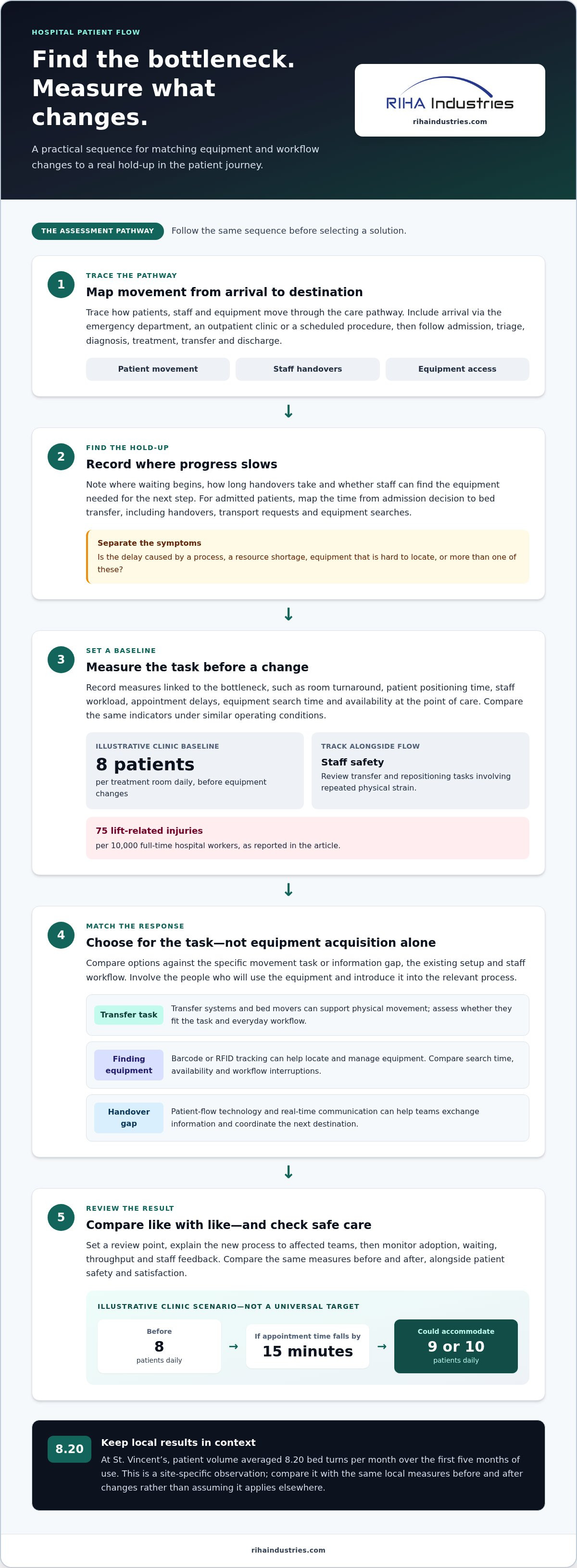
Start by tracing how patients, staff and equipment move through each care pathway. A patient may arrive through the emergency department, an outpatient clinic or a scheduled procedure. Record where waiting begins, how long handovers take and whether staff can find the equipment needed for the next step. This helps reveal whether delays stem from a process, a resource shortage or both.
To select equipment to improve hospital patient flow, map a specific bottleneck and identify its cause. Compare options against the task, existing setup and staff workflow. Involve the people who will use the equipment, introduce it into the relevant process, then measure the same indicators before and after. This keeps the decision focused on a real operational constraint, not equipment acquisition alone.
Build a practical baseline. In an illustrative specialist-clinic scenario, one treatment room accommodates eight patients daily before equipment changes. Track room turnaround, patient positioning time, staff workload and appointment delays. If a change affects task time, compare the same measures under similar operating conditions. This example provides a measurement framework, not a universal target for every clinic.
Look beyond room-level delays. Long boarding times for admitted patients can contribute to overcrowding in emergency departments when inpatient beds aren’t available. Map the sequence from admission decision to bed transfer, noting each handover, transport request or equipment search that interrupts progress. Analytics and patient data can help hospitals identify recurring problems across departments, rather than treating each delay in isolation.
Equipment visibility is another useful measure. Barcode or RFID tracking can help facilities locate and manage medical equipment. Electronic tracking can also show where resources aren’t keeping pace with demand. Compare search time, availability at the point of care and workflow interruptions. These measures help distinguish a genuine shortage from poor distribution or gaps in manual tracking.
Include staff safety when assessing transfer tasks. Hospital workers experience 75 lift-related injuries per 10,000 full-time hospital workers. Review where staff manually reposition or transfer patients, then identify tasks involving repeated physical strain. Compare equipment to improve hospital patient flow against those specific tasks and the movement required. Patient-handling equipment is useful when it fits the transfer task and everyday workflow.
Before introducing equipment to improve hospital patient flow, record baseline measures and set a review point. Explain the new process to affected teams, then monitor adoption, waiting, throughput and staff feedback. In the illustrative clinic scenario, reducing appointment time by 15 minutes could allow the room to accommodate nine or ten patients daily. Assess whether this change also supports safe care and patient satisfaction.
Assess whether patient-handling equipment reduces physical strain during the transfers you’ve identified, and whether it’s available where and when staff need it. Electronic equipment tracking can help facilities see where resources and medical supplies aren’t keeping pace with demand. Consider these findings alongside workflow measures to distinguish availability gaps from delays in locating equipment.
At St. Vincent’s, patient volume averaged 8.20 bed turns per month over the first five months of use. Treat that figure as a site-specific observation, and compare it with the same local measures before and after changes rather than assuming it applies to other settings.
2. Patient flow from admission to discharge
Patient flow follows a person from arrival through registration, triage, diagnosis and treatment, then discharge or transfer. A patient may enter through the emergency department, an outpatient clinic or a scheduled procedure. Each handover between departments depends on timely information, an available destination and suitable equipment. Patient throughput describes how quickly patients move through care, from admission to discharge or transfer. These stages form the pathway hospitals need to coordinate.
Selecting equipment to improve hospital patient flow starts with identifying the movement task or information gap causing friction. Transfer systems and bed movers support physical movement, while tracking technology can help teams locate patients, staff or equipment. The right combination depends on whether the hold-up involves a transfer, a handover or finding a resource. Match equipment and technology to the pathway, rather than assuming one solution will address every delay.
At admission, a patient-flow system may issue a disposable passive RFID or reusable BLE-enabled wristband. Staff link its number to the patient record through a barcode scan. Readers at key points send location data to a central database. For example, after imaging, an update can notify transport staff and the receiving unit, helping them coordinate the handover and prepare the next destination.
Electronic patient records and real-time communication can improve information exchange between care teams. Integrating patient-flow technology with electronic health records and nurse-call platforms can reduce communication gaps. Automated alerts can flag delays or workflow exceptions for staff to address. Digital documentation, electronic prescribing and self-service kiosks can reduce manual steps, provided each function fits the patient’s pathway and staff responsibilities.
In the US, applicable requirements depend on the technology’s function, the patient information it handles and how it exchanges data. Hospitals should assess relevant privacy, security and medical-device requirements for the system’s intended use. Interoperability planning should define what data move between systems, who can access them and how updates reach the right departments. Selecting equipment to improve hospital patient flow also means planning how it will work with existing systems.
Implementation risks include inaccurate location data, incompatible systems, missed alerts and workflows that staff find difficult to follow. A wristband scan won’t support a handover if the receiving unit doesn’t get the update. Map likely failure points, train affected teams and provide a manual fallback if technology becomes unavailable. Review access controls and test data exchange before relying on live updates in patient care.
For a controlled rollout, choose one pathway, define its baseline measures and test the technology with the teams involved. Assess whether transfer equipment, tracking tools or record integration addresses the delay, then monitor handovers, equipment searches and workflow exceptions. This approach helps hospitals implement equipment to improve hospital patient flow while keeping patient needs, staff tasks and system connections in view.
3. Patient-flow benefits for wait times, capacity, safety, and costs
Better coordination can streamline care, reduce avoidable delays and help teams use existing capacity more effectively. For a 275-bed hospital, reducing average length of stay by four hours is equivalent to increasing physical capacity by ten beds. This illustrates how flow improvements can create room for more patients without adding physical beds.
The cost of patient-flow software and equipment depends on the system’s scope, configuration and integration needs; a quote request determines the price. Key factors include the equipment selected, the number of departments involved and the work needed to connect systems with existing workflows.
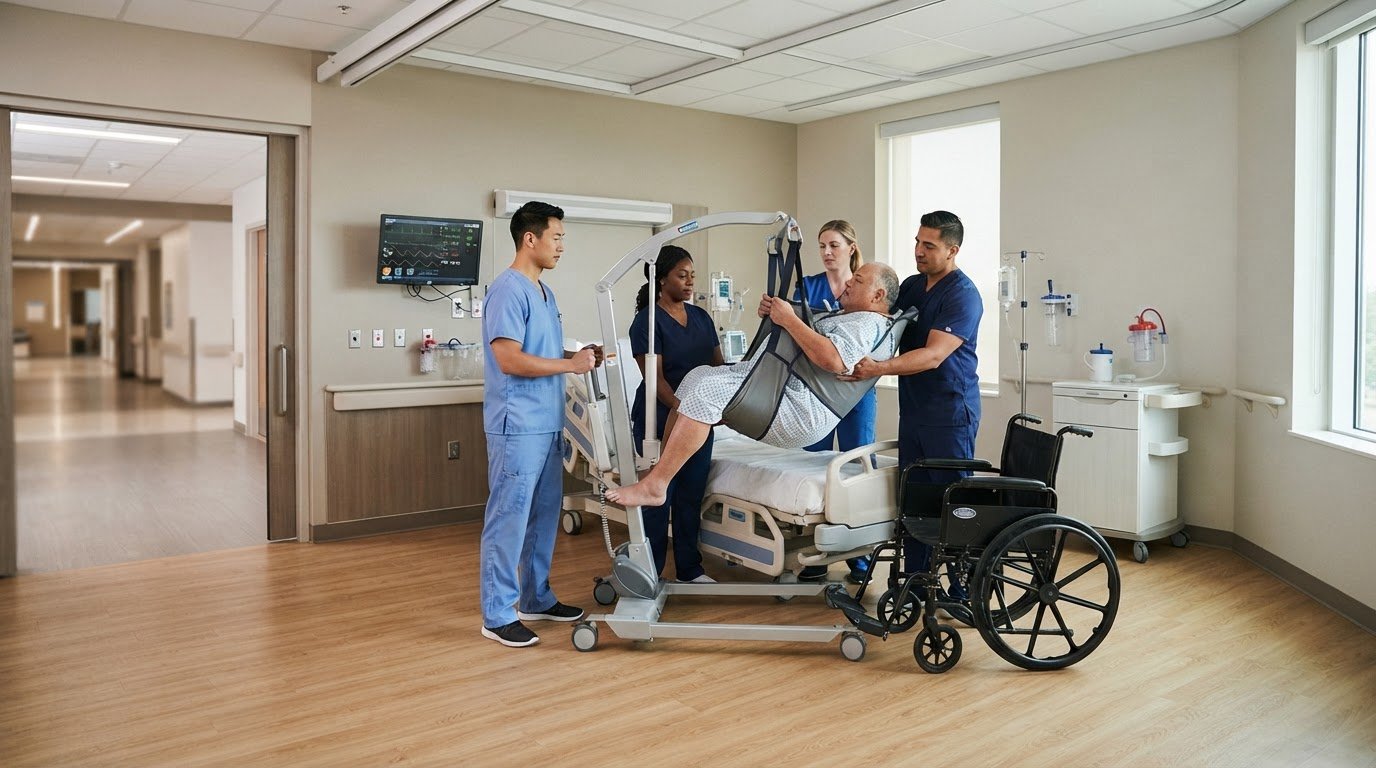
Transport equipment helps staff move patients between wards, imaging and treatment areas, while patient-flow systems can show location and handover status. Together, they can reduce transfer delays by making the next step clearer and helping teams coordinate transport with the receiving department. Transfer equipment, including the StaminaLift Transfer System 5000 and StaminaLift Transfer System 6000, supports patient transfers as part of this movement process.
Bed management systems improve patient throughput by giving teams a clearer view of bed status, admissions and discharge progress. When a bed becomes available, staff can coordinate the next placement and spend less time waiting for information. This works best when updates reflect actual conditions and discharge planning addresses common hold-ups such as transport, prescriptions or post-acute placement.
In the emergency department, equipment that supports patient tracking, transfers and bed coordination can help address different bottlenecks. Tracking technology helps staff see where patients and critical equipment are, while bed management supports the move from emergency care to an inpatient bed. Regularly reassessing people in the waiting room also helps staff identify changes in a patient’s condition and respond appropriately.
Specific improvements can be measured. Providence Holy Cross Medical Center reported an 85 percent decrease in admission turnaround time during the first three months after implementation. It also reported a 53 percent decrease in bed turnaround time during the first three months post-implementation, alongside a 10.6 percent decrease in average length of stay in the first three months of use. These results show why hospitals should track each measure separately rather than relying on one overall flow figure.
Improved flow can support patient safety by reducing delays and helping staff coordinate transfers. Equipment that reduces manual handling can also support safer movement when it matches the transfer task and staff workflow. Hospital workers experience 75 lift-related injuries per 10,000 full-time hospital workers, making staff handling demands an important consideration during equipment planning.
For a balanced evaluation, compare waiting times, bed turnaround, transfer delays, equipment availability and staff handling demands before and after changes. Review patient feedback and workflow exceptions too. A faster process is valuable when it also preserves safe care, clear communication and a manageable workload for healthcare teams.
4. Benefits of efficient patient flow
Efficient flow helps facilities use beds, staff and treatment spaces more effectively. For patients, coordinated steps can mean less waiting between assessment, treatment and transfer. For teams, fewer stalled handovers make it easier to focus on patient care instead of locating resources or chasing updates. The benefit depends on improving the step that limits movement through the care pathway.
Emergency departments come under pressure when inpatient beds aren’t ready for admitted patients. Roughly half of patients admitted to hospitals go through the emergency department, so delays there can affect demand across the hospital. Clear bed status and timely communication help teams coordinate admissions, transfers and discharges, reducing avoidable holds in emergency care.
More capacity can come from better use of existing beds, not only from adding physical space. In the Health First system in Florida, inpatient bed occupancy decreased by as much as 37% after process changes. That example shows how changing processes can affect bed availability. Hospitals can monitor occupancy alongside discharge progress and transfer delays to understand operational effects.
Real-time visibility can also help staff direct their time where it’s needed. When teams can locate colleagues and coordinate tasks, they can respond to patient needs without unnecessary searching or repeated calls. For example, a unit managing several transfers can use clear status updates to organise the next handover and prepare the receiving area.
Consistent processes support safer, more reliable patient care. Standardised triage protocols and staff training help teams assess acuity and prioritise treatment consistently. In an emergency department, regularly reassessing people in the waiting room can help staff identify deterioration and respond. These steps make flow improvements part of clinical coordination, rather than a push to move patients faster at any cost.
Demand can change quickly during seasonal illness or mass-casualty incidents, putting pressure on hospital capacity. A defined escalation process helps facilities identify available resources, coordinate across departments and adjust workflows as demand shifts. Hospitals can use patient-flow data to spot recurring pressure points and plan responses before congestion disrupts other services.
Lean methodology offers another practical way to improve efficiency. Teams examine a workflow to remove waste and duplicate processes, then improve communication between departments. For example, mapping a discharge handover may reveal repeated information requests or unclear task ownership. Removing these steps can help staff coordinate discharges and prepare beds for incoming patients.
Patient satisfaction can improve when waiting and movement feel more coordinated. Hospitals can review feedback alongside operational measures, such as delays between departments and recurring workflow exceptions. Dr Peter Viccellio, M.D., introduced procedures to improve hospital-wide patient flow that sharply reduced emergency department boarding beginning in 2001. His example highlights how coordinated processes can address system-wide flow, not just one department’s workload.
Real-time staff visibility can help hospitals locate and deploy team members efficiently. This makes it easier to match available support with changing needs across the care pathway and coordinate without unnecessary searching. Keeping staff location information current can support operational decisions as priorities shift.
5. Durability and reliability
Reliable equipment supports predictable movement through clinical areas, especially when staff depend on it during busy handovers. Assess durability against the tasks, environment and frequency of use, not appearance alone. For example, observe how a transfer device moves through corridors, turns into patient rooms and fits around existing equipment. These practical conditions show whether it suits the intended workflow.
Start with a task-based assessment. Ask staff to demonstrate a typical patient transfer, then note setup steps, manoeuvring, storage and cleaning between uses. Include the clinical teams who handle equipment daily, because small practical issues can affect consistent use. Equipment that fits the transfer process helps staff complete the task with fewer workflow interruptions.
Reliability also depends on routine care. Establish a maintenance schedule, assign responsibility for checks, and record repairs and recurring faults. A clear log helps facilities spot patterns, such as a component needing repeated attention or equipment being unavailable after use. Preventative maintenance and repairs support continued operation, while staff need a clear process for reporting problems promptly.
Check equipment before each use, following the manufacturer’s instructions and local procedures. Staff should know how to identify visible damage, report a fault and remove affected equipment from use. For example, a transfer device with a damaged component isn’t ready for use simply because it’s back in its usual storage area. A consistent check-and-report process helps protect patients and staff.
Technology also needs reliability checks. If a tracking system helps staff locate mobile equipment, verify that location records are useful in the areas where teams work. Compare the displayed status with the equipment’s actual location during routine operations. Clear procedures for updating records help prevent an item appearing available when it has moved, been assigned or needs servicing.
Plan for interruptions before they occur. Identify a manual fallback for essential tasks if tracking, communications or power-dependent functions become unavailable. Train staff in that process and include it in workflow practice. For instance, teams should know how to request equipment and communicate a transfer without relying on a single digital status screen.
When reviewing options, document how each device fits existing hospital equipment, staff tasks and maintenance routines. Consider ease of operation, cleaning requirements, storage and access to repairs as part of the same decision. These factors help assess long-term suitability, not just initial performance. To discuss patient transfer equipment for your workflow, explore patient transfer solutions.
RIHA Industries: StaminaLift Transfer System 5000
RIHA Industries’ StaminaLift Transfer System 5000 is a patient-transfer option for hospitals seeking to support movement between care areas. Its design integrates with existing hospital equipment, making it relevant when transfer tasks are creating workflow pressure or adding physical demands for staff.
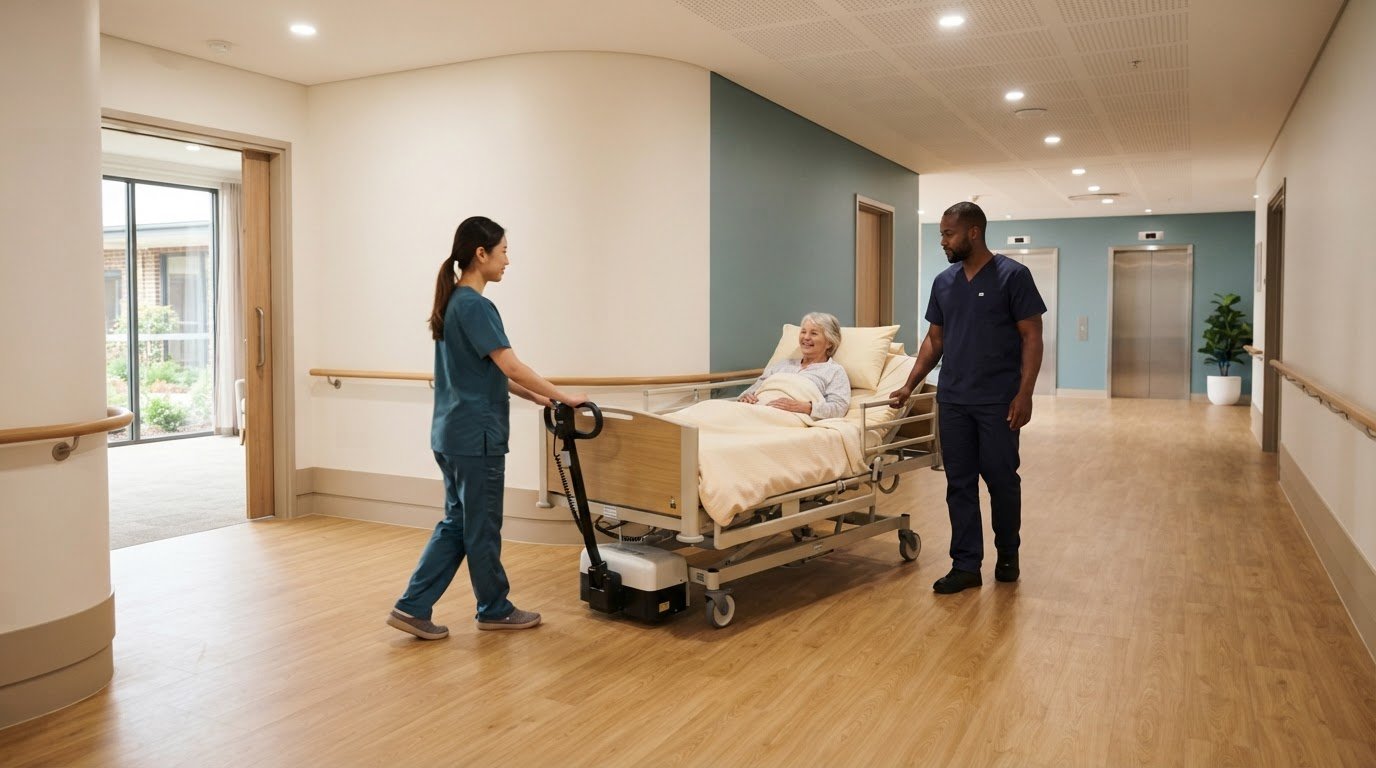
Choosing transfer equipment starts with the task: consider where transfers occur, how staff currently complete them and how equipment fits the existing setup. RIHA Industries also offers the StaminaLift Transfer System 6000 and StaminaLift 2100 Bed Mover, alongside the Easi Rider and Easi Mover tugs for moving heavy loads. These options address different movement needs, so match the equipment to the workflow rather than expecting one solution to suit every task.
Contact RIHA Industries to discuss patient movement equipment for your hospital.
Take the next step towards smoother patient movement
Turn your operational findings into a practical equipment brief. Identify the patient movement task that needs attention, the spaces where it occurs and how the equipment must work alongside existing hospital systems. This gives clinical and procurement teams a shared basis for assessing options and planning adoption.
For hospitals reviewing equipment to improve hospital patient flow, RIHA Industries offers the StaminaLift Transfer System 5000, StaminaLift Transfer System 6000 and StaminaLift 2100 Bed Mover. These options support different patient movement needs, so align the discussion with the task your facility wants to address.
A focused conversation can help connect your workflow priorities with relevant transfer equipment. Contact RIHA Industries to discuss your hospital’s patient movement requirements. A considered next step can help your team build a more coordinated approach to movement and capacity.
Frequently Asked Questions
Why Is Patient Flow Important?
Patient flow matters because coordinated care helps patients receive the right next step without avoidable disruption. If one appointment runs late, for example, it can affect access to clinicians and diagnostic resources later in the day. A clear, manageable sequence helps teams respond to changing needs, maintain continuity between services and protect time for direct patient care. The aim is dependable movement through care, not simply moving people faster.
What is the cost of hospital patient flow software and equipment?
The cost depends on the system’s scope, configuration, equipment selected, departments involved and integration needs. Request a quote to determine the price.