How to Move Bariatric Patients at Different Mobility Levels
A safer transfer starts by assessing what the patient can do, not by attempting to lift them. To understand how to move bariatric patients safely, match the transfer method and equipment to their mobility, weight-bearing ability and need for assistance. Never move a patient alone. Plan the route, allow enough space for the care team, and stop to reassess if the patient feels uncomfortable or unstable.
It’s understandable to focus on the physical move itself, but preparation matters just as much. A clear plan helps protect the patient’s comfort and dignity while reducing unnecessary strain and the risk of uncontrolled movement.
This guide explains how to assess different mobility levels, plan and carry out transfers, and choose suitable equipment for each situation. It also covers common injury risks, practical ways to reduce them and what to consider when a patient’s needs change.
Table of Contents
How Do I Move a Plus-Size/Bariatric Patient?
A clear plan for how to move bariatric patients safely starts with the person’s current mobility, weight and transfer needs. Choose suitable equipment, prepare the route and coordinate trained caregivers before movement begins. Never attempt to move a bariatric patient alone.
Bed, Chair and Toilet Transfers
Transfers may move a patient between a bed, chair or toilet, or laterally between surfaces. The patient’s ability to assist determines the support and equipment required. For lateral movement, coordinate the team and use suitable transfer equipment to control movement across the gap. For a chair or toilet transfer, make room to position staff and equipment. Confirm that the equipment’s maximum weight capacity exceeds the patient’s weight.
When a patient is unconscious, safely lifting or repositioning them may involve up to 5 staff members. Agree on roles and cues before starting.
Transfer Space and Route Preparation
Prepare the route by clearing obstacles and allowing enough space for staff and equipment to move around the patient. Check doorways, room layout and turning space before starting. Confirm that a lift base fits beneath the bed or stretcher frame and that the planned equipment can be positioned in the sending room. If the space is too tight, pause and revise the method rather than forcing the planned lift.
For emergency evacuation, assess mobility, select suitable equipment and plan a clear route to safety. Include turning points, handoffs and an alternative if the route becomes unsuitable.
Transfer Training and Staff Outcomes
Transfer training prepares staff to use equipment together and respond when conditions change. It should cover sling and lift compatibility, team roles, and what to do if a room cannot accommodate the planned lift. Knowing how to move bariatric patients safely also means preparing for an unconscious patient or an obstructed route, rather than improvising under pressure.
A reported 12-week staff-training programme was associated with a 90% reduction in restricted work hours and a 91% improvement in lost days over the prior year. These reported outcomes show the value of planned, practiced handling for staff.
Applicable Transfer Guidelines
OSHA states that more than 30 years of research and experience show proper body mechanics or manual lifting techniques alone aren’t effective for reducing back and other musculoskeletal injuries. This supports using planned equipment and coordinated assistance, rather than relying on lifting posture alone. The right approach depends on the patient, equipment and transfer environment.
For ground or air medical transport handoffs, confirm the equipment needed at each transition and whether matching equipment is ready at the receiving facility. Agree on a backup if a lift cannot connect with the transport stretcher or conditions change. Record what worked after the move to inform future transfers.
Patient independence and mobility levels
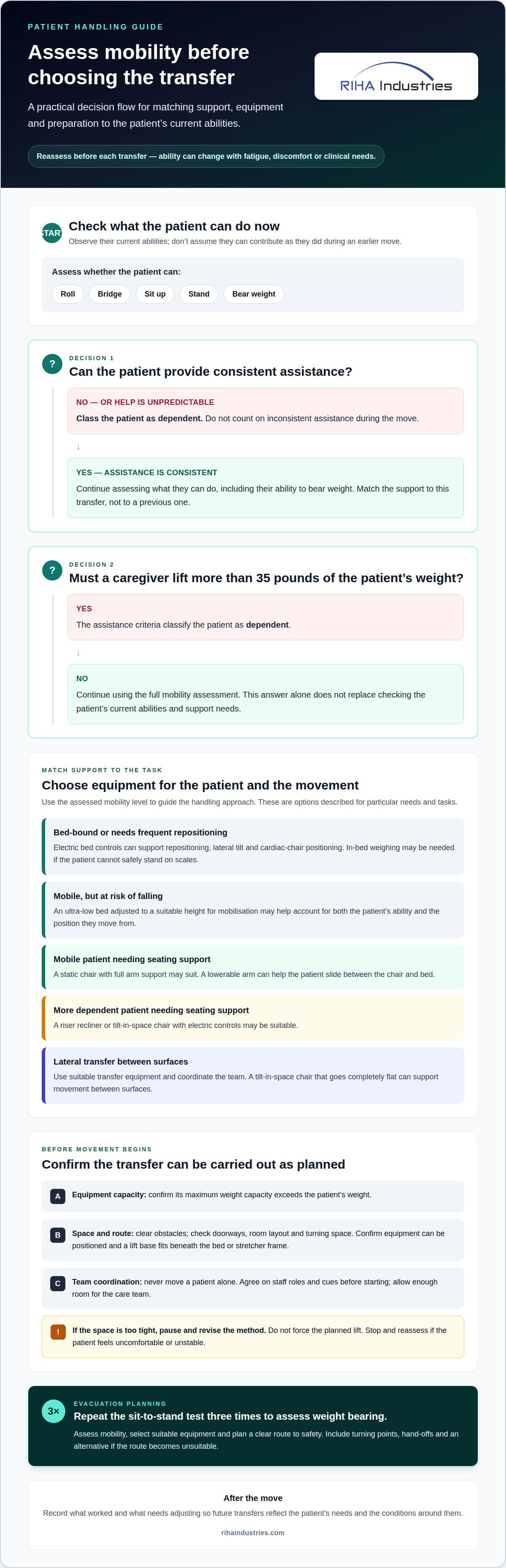
Assess what the patient can do before selecting a movement method. Mobility can change with fatigue, discomfort or clinical needs, so base each transfer on their current abilities.
Assessing Patient Mobility
Assessing mobility means identifying how much the patient can contribute to movement and what support they need. This distinction matters because a patient who can bear some weight needs a different approach from someone who is fully dependent on caregivers.
Observe whether the patient can roll, bridge, sit up, stand and bear weight. During evacuation planning, repeat the sit-to-stand test three times to assess weight bearing. Note whether the patient’s assistance is consistent: someone who provides unpredictable help is classed as dependent.
Assistance criteria also classify a patient as dependent if a caregiver must lift more than 35 pounds of the patient’s weight. Don’t assume a patient can contribute just because they could during an earlier move. Pain, fatigue or a change in condition may reduce their ability to assist, so reassess before each transfer.
A mobile patient at risk of falling may benefit from an ultra-low bed adjusted to a suitable height for mobilisation. The assessment should therefore consider both the patient’s ability and the position they need to move from.
Bed Mobility and Repositioning
Bed mobility covers movement within the bed, including turning, repositioning and moving towards its edge. For a bed-bound patient, these tasks may need to be completed using electric controls rather than relying on the patient to shift independently.
Electric controls can support frequent repositioning, lateral tilt and cardiac-chair positioning. In-bed weighing may also be needed when a patient cannot safely stand on scales. These options help staff manage positioning while accounting for the patient’s limited movement.
Match seating support to the person’s ability. A mobile patient may benefit from a static chair with full arm support; a lowerable arm can help them slide between the chair and bed. A more dependent patient may need a riser recliner or tilt-in-space chair with electric controls. If lateral transfer is required, a tilt-in-space chair that goes completely flat can support movement between surfaces.
A firm mattress surface can assist a mobile patient during mobilisation. If skin begins to deteriorate, the surface should be capable of being stepped up quickly. Reassess positioning and support as physical or clinical needs change. For facilities reviewing suitable patient transfer equipment, mobility needs help inform the right handling approach.
Planning, executing, and evaluating a handling task
A handling task works best as a planned sequence: assess the person, prepare the move, perform it, then record the outcome. This makes the next transfer better informed if the patient’s needs or surroundings have changed.
Staffing and Communication
Staffing and communication give caregivers clear roles and shared instructions. This matters because a coordinated team can respond to the patient and equipment together, rather than making separate decisions mid-transfer.
Before starting, agree who will operate the equipment, who will guide the patient and who will monitor movement. Name a lead caregiver to give clear cues, such as when to begin, pause or stop. Confirm that the patient understands the plan and can signal discomfort. If their assistance is unpredictable, plan for dependent handling rather than assuming they can contribute consistently.
Communication must continue during the move. Caregivers should use agreed cues and watch for changes in the patient’s position, stability or comfort. If the patient becomes worried or unstable, stop and reassess before continuing. A planned pause is safer than trying to regain control after movement becomes difficult.
Task Planning and Safe Routes
Task planning matches the patient, equipment, destination and route before the move begins. It matters because even a suitable device can be unusable if it cannot fit around the bed or along the route.
Confirm that the equipment’s capacity exceeds the patient’s weight, and check that the sling and lift are compatible. Consider the starting and receiving surfaces, available turning space and any doorway or corridor restrictions. For a move between rooms, plan where the equipment will turn and where caregivers can stand without obstructing the route. Keep the path clear and make sure the receiving area is ready.
Include a backup plan for changed conditions. For example, if the lift base cannot fit beneath the bed, pause and choose a suitable alternative rather than attempting the same movement by hand. If the patient’s condition changes or the route becomes obstructed, reassess the plan before proceeding. Equipment choice and route planning must work together.
During the transfer, follow the agreed sequence and operate equipment as intended. Keep the patient informed, observe their comfort and maintain controlled movement between surfaces. Don’t improvise a lift if the equipment or space doesn’t match the plan. A change in the patient’s contribution, position or stability is a reason to pause and reassess.
Afterwards, record the equipment used, the route, the assistance required and any difficulties encountered. Note whether the patient contributed as expected and whether the planned method worked. These details help caregivers prepare for future moves and adjust the handling plan when needs, capacity or room conditions change.
Walking aids, turn-assist devices, commodes and hoists
Choose mobility equipment according to what the patient can do, the clinical task and the destination. A patient who can bear weight but cannot walk may use a turn-assist device for a transfer. Walking aids can support people with very limited mobility, while a hoist may be necessary for some immobile patients. Reassess equipment as physical and clinical needs change.
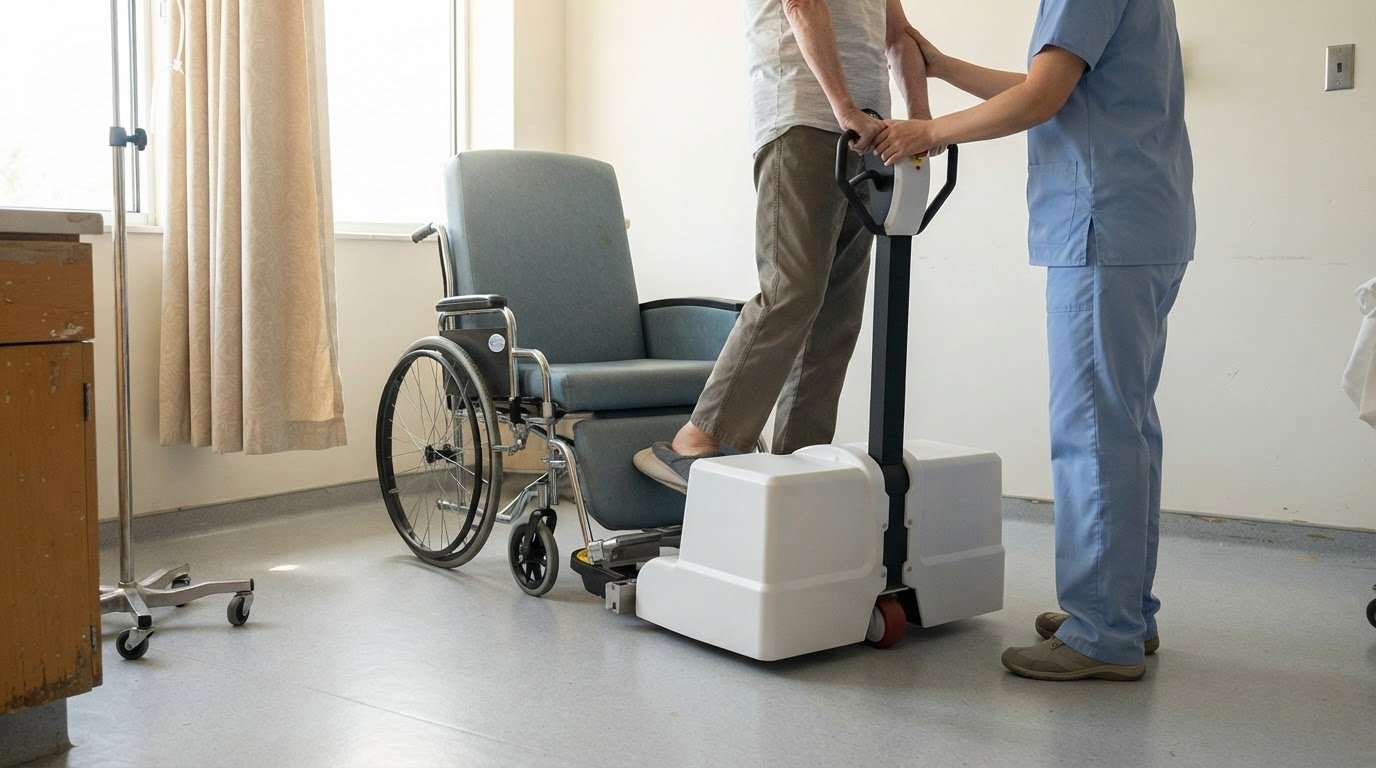
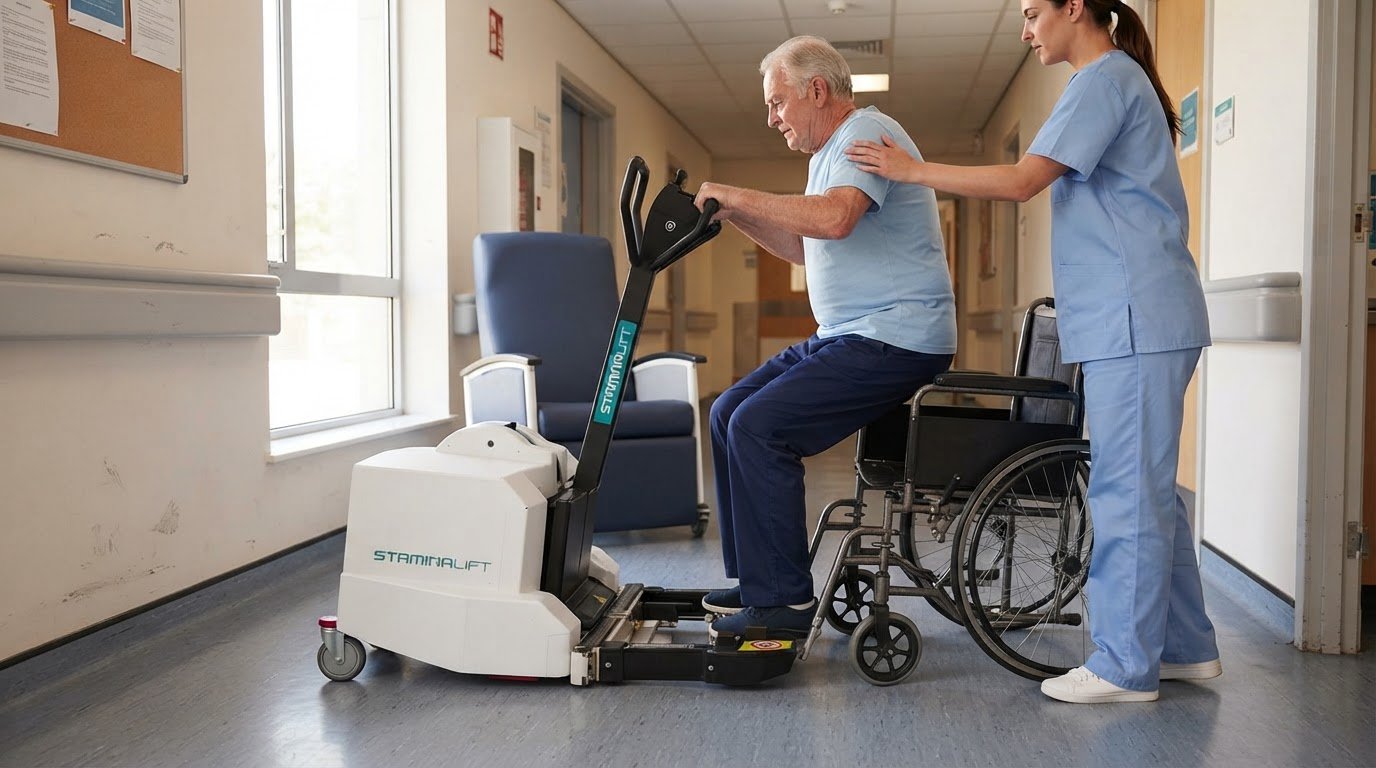
A bariatric commode that also functions as a shower chair can assist movement in a bathroom. For a patient who can stand and take steps, a walking aid may support movement without replacing their own effort. By contrast, a turn-assist device is designed for a patient who cannot walk but can bear weight. Choose the right option for the person and task, rather than treating these devices as interchangeable.
Hoists support transfers when a patient can’t safely move between surfaces without full assistance. The specialised sling must match both the patient and the lift; compatibility is part of equipment selection, not an optional extra. Check the lift before use and maintain it on a documented service schedule. These steps help staff use equipment as intended throughout the transfer.
Lift type also affects where and how a transfer can happen. Mobile floor lifts can move patients between rooms or surfaces, but need adequate floor space and turning room. Ceiling-mounted lifts are fixed to specific rooms and intended for repeated transfers within those spaces. Stand-assist lifts suit patients who can bear some weight, but aren’t intended for fully dependent transfers.
Capacity must suit the patient and the movement involved. Bariatric patient lifts typically have safe working load ratings starting around 600 lb, while heavy-duty models can exceed 1,000 lb. Best-practice guidance recommends a lift safe working load at least 20 to 25% above the patient’s weight, to accommodate dynamic loading and reduce mechanical stress. Match the sling and lift to the individual patient as well.
Team assistance helps staff use equipment in a coordinated way: assign who operates the lift, who supports the patient and who watches the route. Before moving, caregivers should agree on clear cues and explain the transfer to the patient. During a hoist transfer, the team can pause if the sling shifts or the patient becomes uncomfortable. Stop, reposition the equipment or reassess the plan before continuing.
Support needs can also change between transfers. A patient may use a walking aid in one setting, then need a hoist after a change in clinical condition. Review the patient’s weight-bearing ability, destination surface and available space each time. Choosing equipment around these factors helps the team assist without asking the patient or caregivers to manage a method that doesn’t fit.
Common bariatric patient-handling injury risks
Injury risks arise when movement is uncontrolled, staff rely on manual lifting, or equipment doesn’t match the patient’s needs. Assess the patient and handling task together. The key question is how to control loading and movement without exposing the patient or caregivers to avoidable strain.
For caregivers, manual lifting can place substantial load on the back and other musculoskeletal structures. OSHA states that more than 30 years of research and experience show proper body mechanics or manual lifting techniques alone aren’t effective for reducing these injuries. Dr Thomas Waters set a maximum recommended manual lifting limit of 35 lbs under otherwise ideal patient-handling conditions. That is not a target for lifting; it shows why a transfer plan should not depend on staff strength or posture alone.
Patient weight also affects the load involved in repositioning limbs. A leg accounts for approximately 16% of a person’s total body weight; for a 350-pound patient, one leg weighs approximately 62 pounds. Trying to lift or reposition a limb manually can therefore create a substantial load for staff. Use an appropriate handling method and suitable equipment instead of assuming a limb is light enough to move without assistance.
Patients face different risks during a transfer. Uncontrolled movement can cause trauma and skin tears, particularly if the patient slides or shifts against a surface. A fall is another concern: obesity is associated with a 25-31% higher risk of falling compared with not having obesity. Among patients injured in a fall, obesity is associated with nearly two-fold higher odds of cardiopulmonary complications or infections. These figures underline why stable positioning and controlled movement matter.
Reduce avoidable loading by matching the transfer method to the patient’s current ability and the equipment’s capacity. Confirm that equipment is compatible before starting, and coordinate staff roles so movement stays controlled. If the patient becomes uncomfortable, unstable or worried, stop and reassess rather than continuing through a difficult movement. A changed position or loss of stability is a reason to reset the plan.
Risk can also increase when staff rely on a familiar method despite changed circumstances. A patient who could assist earlier may now be dependent, while a tight route may prevent equipment from moving as planned. Reassessing the task helps identify these changes before they result in a fall, skin injury or staff strain. Review the equipment, route and patient response after each transfer, then use relevant observations to inform future handling plans.
For facilities reviewing ways to reduce manual handling during patient movement, explore patient transfer systems suited to the task.
RIHA Industries
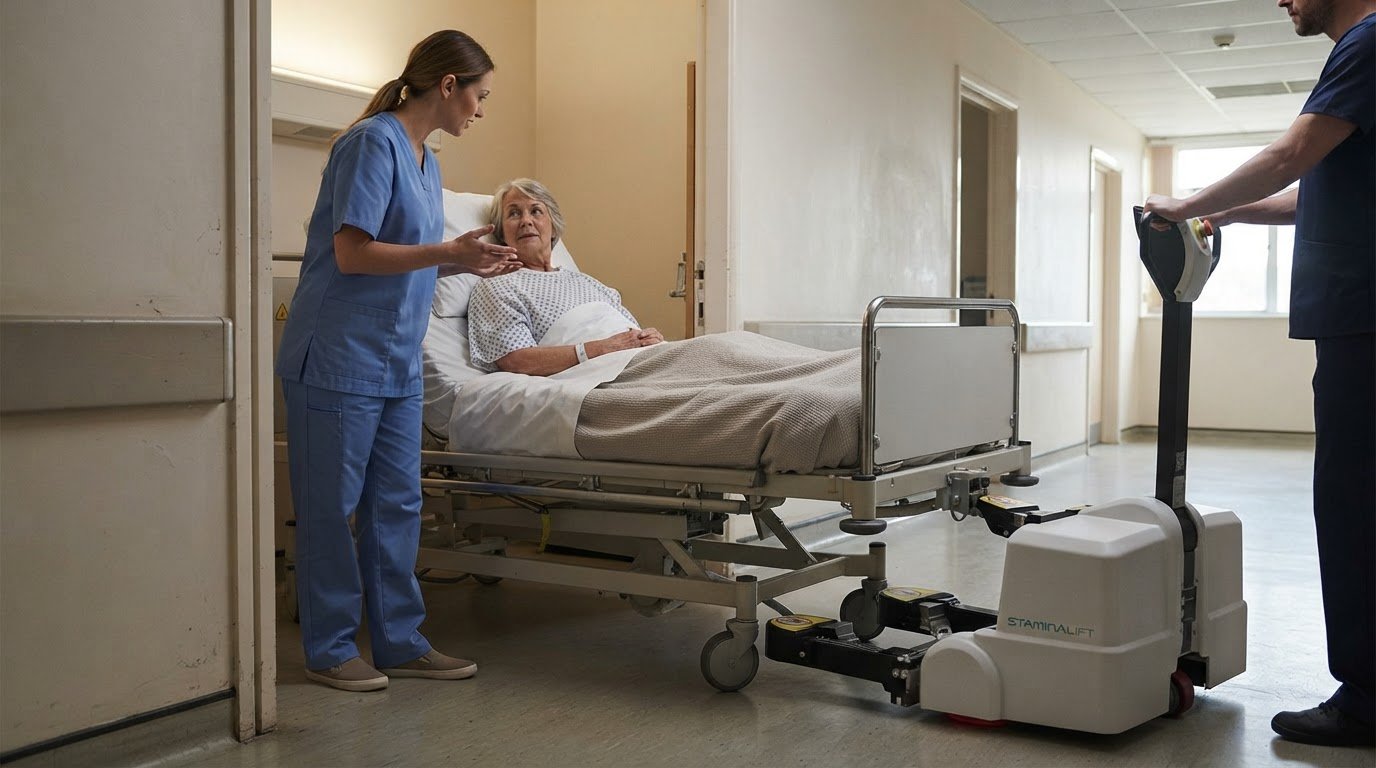
RIHA Industries designs and manufactures patient transfer systems and bed movers to support safer movement in healthcare settings. When a facility is reviewing how equipment can support its handling plan, RIHA’s range includes transfer systems, the StaminaLift 2100 Bed Mover, and Easi Rider and Easi Mover tugs. These solutions can be considered alongside the patient’s mobility, transfer requirements and existing hospital equipment, helping facilities plan for practical handling needs without relying solely on manual movement.
Contact RIHA Industries to discuss patient transfer and bed-moving equipment for your facility.
Build a handling approach that fits your facility
Make safe handling routine by aligning equipment choices with how your facility moves patients. Review where current processes rely on manual effort, and identify transfers or bed movements that could benefit from a purpose-designed system. This practical review can help turn what you’ve learned about how to move bariatric patients safely into equipment decisions that suit your setting.
RIHA Industries offers the StaminaLift Transfer System 5000, StaminaLift Transfer System 6000 and StaminaLift 2100 Bed Mover for healthcare environments. Consider how these options relate to your existing equipment and patient-handling needs as you plan future improvements.
Contact RIHA Industries to discuss patient transfer and bed-moving equipment for your facility. A considered next step can help your team build a more consistent approach to patient movement.
Frequently Asked Questions
What equipment is needed to safely move a bariatric patient?
Choose equipment based on the transfer, the patient’s mobility and their weight. A hoist with a compatible sling may suit a patient who can’t assist, while a turn-assist device is for someone who can bear weight but can’t walk. For movement between rooms, consider whether a mobile lift can manoeuvre along the route. The equipment’s capacity must exceed the patient’s weight.
How do you assess a bariatric patient before moving or transferring them?
Assess what the patient can do now, rather than relying on an earlier transfer. Check whether they can roll, sit, stand or bear weight, and whether their assistance is consistent. Ask about discomfort or concern before movement, and observe their stability during any agreed mobility assessment. Also consider the destination and equipment needed, since a change in condition can alter the safest approach.
What are the step-by-step procedures for transferring a bariatric patient from bed to chair?
Plan the transfer around the patient’s ability and the equipment available. A practical sequence is:
Assess whether the patient can bear weight and contribute reliably.
Position the chair and prepare the equipment for the transfer.
Confirm the equipment capacity and sling compatibility, if using a lift.
Explain the movement and agree on cues with the patient and caregivers.
Move in a controlled way, stopping if discomfort or instability occurs.
Reassess before continuing if the plan no longer fits.
How many caregivers are needed to move a bariatric patient safely?
There isn’t one team size for every transfer; the patient’s ability, equipment and task all affect staffing. Moving a bariatric patient requires multiple caregivers, and assisting staff should be trained. Safely lifting or repositioning an unconscious patient with obesity may involve up to 5 staff members. Never attempt to lift or move a bariatric patient alone. Agree on roles and clear cues before starting.
What are safe patient-handling weight limits for staff and equipment?
For manual lifting, Dr Thomas Waters identified a maximum recommended limit of 35 lbs under otherwise ideal patient-handling conditions. That isn’t a target for staff to lift during a transfer. Equipment capacity must exceed the patient’s weight; best-practice guidance recommends a bariatric lift safe working load at least 20 to 25% above it. Check the rating for the specific equipment and task.
How do you use a bariatric patient lift, sling, and transfer sheet?
Use a sling that matches both the patient and the lift, then follow the equipment’s operating instructions and the planned transfer method. A transfer sheet may be suitable for lateral movement between surfaces, but it doesn’t replace a hoist when full support is needed. Before moving, coordinate the team, explain the process to the patient and position the equipment for the planned transfer.
How do you move a bariatric patient up in bed or reposition them safely?
Choose a method that limits manual lifting and suits the patient’s ability to assist. For a dependent patient, electric bed controls can support repositioning, lateral tilt or cardiac-chair positioning. Coordinate the movement and monitor the patient’s comfort and position throughout. Stop and reassess if they feel discomfort, become unstable or express concern. Record the method and equipment used to inform future care.
What are the risks and injury-prevention guidelines for bariatric patient handling?
Risks include staff musculoskeletal injuries from manual handling and patient trauma or skin tears from uncontrolled movement. OSHA states that proper body mechanics or manual lifting techniques alone aren’t effective for reducing back and other musculoskeletal injuries. Reduce risk by planning the task, using suitable equipment and coordinating trained caregivers. Check that equipment fits the patient and transfer, and pause if stability or comfort changes.