How to Relocate a Hospital Bed by Yourself at Home
Moving a hospital bed alone isn’t automatically safe: the bed’s design, the route and the handling equipment all matter. Learning how to move a hospital bed with one person starts with reducing the load, securing loose parts and using suitable moving equipment, rather than trying to lift or push the bed unaided.
It’s understandable to want to manage the move yourself, especially when the bed needs to pass through a tight space at home. But protecting yourself and anyone using the bed comes first. Moving a bed is different from repositioning a patient: UF Health advises that at least two people are needed to safely move a patient up in bed.
This guide explains how to disconnect and prepare the bed, plan a clear route, and consider straps, a transport cart or the bed’s castors. You’ll also learn when a solo move may pose too much risk and how controlled handling can help reduce strain and prevent damage to the bed or home.
Unplug the bed and secure its cables before preparing it for movement; follow the bed’s instructions for folding or disassembly.
Separate moving the bed from moving a patient. Repositioning a patient safely requires help, and pulling them by the arms can cause injury.
Choose moving straps or a transport trolley to help manage the load, and use castors only when the route and bed setup allow controlled movement.
Map the route and measure doorways before you start, so tight turns or obstacles don’t force an unsafe lift or manoeuvre.
Stop if the bed can’t be moved with control; the right handling equipment can reduce the physical burden of moving heavy healthcare equipment.
Table of Contents
Disconnecting the bed from its power supply
Decide whether a solo move is appropriate before touching the bed. One person should move it only if it can be prepared, controlled and manoeuvred without force. If it feels unstable or too heavy, arrange professional medical equipment movers instead.
Separate moving the bed from moving its occupant. UF Health advises that at least two people are needed to safely move a patient up in bed. Don’t try to move a patient alone while relocating the bed.
Clear the bed before disconnecting it. Remove loose bedding, pillows and personal items, then make sure nobody is using the bed. This gives you access to the power lead and helps prevent items catching during preparation.
Lower the bed into a stable position using its controls, if they work. Then switch it off and unplug it from the wall socket or power supply. Keep the plug in view as you disconnect it, rather than pulling the cable.
Coil the power cable and any other bed cables neatly. Secure them with the bed’s provided hook-and-loop fastener before folding or separating parts. This keeps cables clear of joints, wheels and the floor, where they could snag or be damaged.
Check the manufacturer’s instructions for the specific bed before disassembly. Hospital beds often separate into sections, but their fasteners and folding methods differ. Don’t remove unfamiliar parts or force a joint that resists movement.
If the instructions call for folding, remove the screws at the bed’s centre. Push the centre upwards until the ends meet. Reinstall and tighten the screws, then engage the latch to secure the folded position.
Keep screws and small fittings together in a labelled container. For example, place the centre screws beside the bed’s manual rather than leaving them on the floor. This makes reassembly more straightforward and reduces the chance of losing parts.
Pause before moving the prepared bed. Look for a loose cable, an unsecured latch or a section that shifts when gently checked. If the bed won’t stay folded or its parts seem damaged, don’t transport it in that condition.
Use professional medical equipment movers when the bed can’t be safely prepared or controlled alone. A narrow route, steps, heavy sections or a faulty power connection can make solo handling impractical. If you’re unsure about disassembly, contact the bed’s manufacturer for guidance.
Preventing patient and caregiver injuries
Keep patient care separate from moving the bed. UF Health advises that at least two people are needed to safely move a patient up in bed. Don’t attempt that task alone while preparing or relocating the bed.
If someone needs repositioning, use a slide sheet or draw sheet rather than pulling their body across the mattress. First, make the bed flat and raise it to a height that reduces strain on the caregiver’s back.
Place the sheet beneath the patient by gently rolling them onto their side, positioning the sheet, then returning them onto it. Ensure their head, shoulders and hips are supported before anyone begins a repositioning pull.
For a draw sheet, fold it in half lengthwise and position it across the bed between the person’s head and knees. Two helpers should stand on opposite sides, hold the sheet near the upper back and hips, then move together on a count of three.
Pull the person towards the head of the bed; don’t lift them or tug beneath their arms. Pulling under the arms can injure the shoulders. If the person can help, ask them to bring their chin towards their chest and bend their knees, keeping their heels on the bed.
Reduce skin friction during every repositioning. Rubbing can scrape or tear skin, especially around the shoulders, back, buttocks, elbows and heels. Remove a slide sheet once repositioning is complete, and smooth out wrinkles in the bedding.
When turning someone, use two people and lower the bed to make the turn easier. Stand with feet shoulder-width apart. Lean from the hips as you guide the sheet, rather than rounding or twisting your back.
Support the person’s position after a turn. For side-lying, bend the legs slightly and place a pillow between the knees. Keep the top leg slightly forward of the bottom leg to reduce pressure on it.
If the person can’t bend their knees, they can cross one ankle over the other towards the direction of the turn. For someone lying on their back, don’t place anything beneath the heels. Follow their care plan for positioning needs.
Don’t move a patient up in bed alone. People who cannot reposition themselves may need help changing position regularly. For repeated patient handling, patient-transfer equipment can help reduce the physical burden on caregivers.
Before moving, confirm the sheet supports the patient’s head, shoulders and hips, and raise the bed to a level that reduces strain on the caregiver’s back if possible.
Using moving straps and a transport trolley
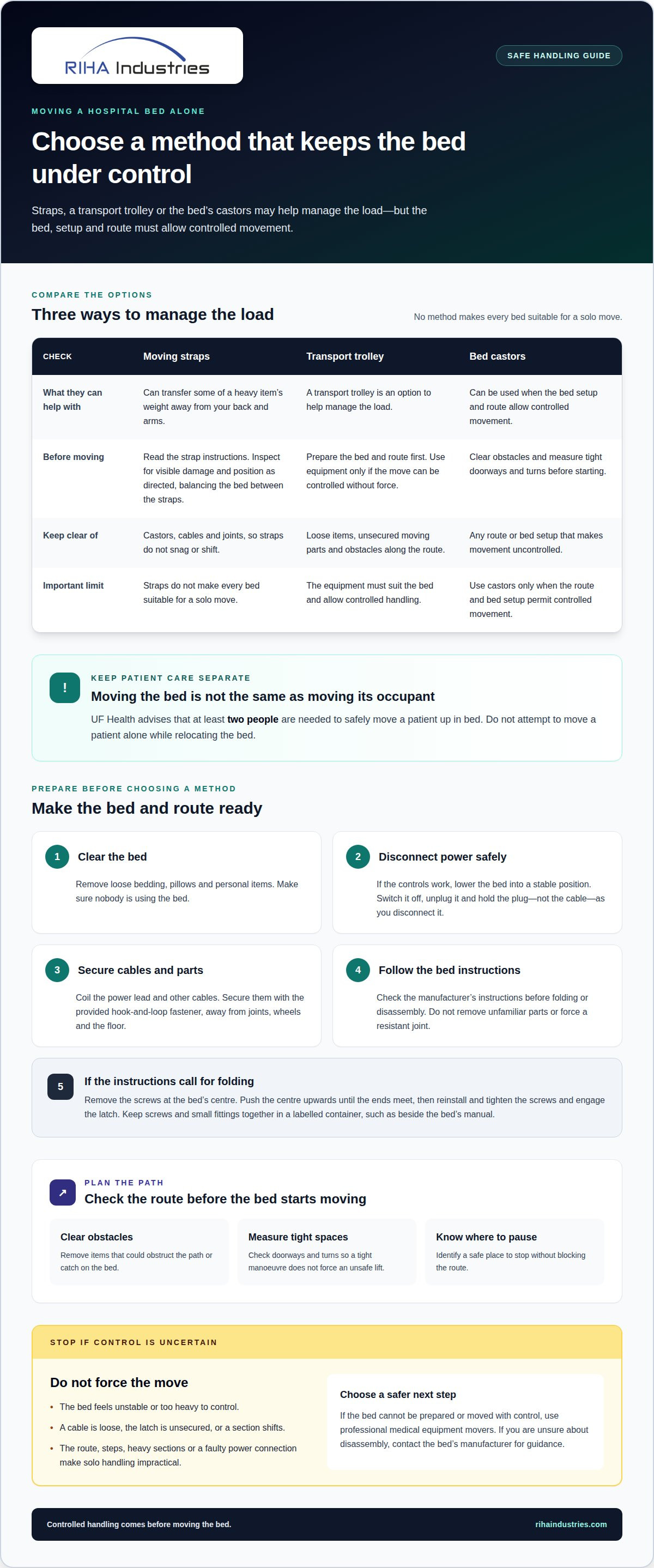
Moving straps can transfer some of a heavy item’s weight away from your back and arms. They don’t make every bed suitable for a solo move. Use them only when the bed’s shape, your route and the strap instructions allow controlled handling.
Prepare the bed and route before fitting equipment. Remove loose items, secure moving parts and clear obstacles from the path. Measure tight doorways and turns, then decide where you can pause safely without blocking the route.
Read the strap instructions and inspect the straps for visible damage. Position them as directed, with the bed balanced between them. Keep straps clear of castors, cables and joints so they won’t snag or shift as the bed moves.
Use the handles to guide the bed, not to jerk it forward. Keep your back in a neutral position and move smoothly. If the straps slip, the bed tilts or you need to strain, stop and reset the setup.
A transport trolley can carry a folded hospital bed. Check that the folded bed sits securely on the trolley and doesn’t overhang in a way that catches doorframes. Keep any latch engaged during transport to prevent the bed opening.
Don’t try to lift a heavy bed onto a trolley alone. If loading requires lifting or awkward handling, get assistance or use a suitable loading method. Once loaded, check the trolley’s stability before moving it from its starting position.
Protect floors and walls by laying down suitable floor coverings, clearing the route and padding vulnerable corners. Move slowly through doorways, keeping the bed or trolley centred and away from skirting boards, furniture and wall edges.
Start with a short, controlled movement on a clear, level section. Keep the load close enough to guide without leaning or twisting. Watch the wheels and straps as you move, and pause if the bed drifts or catches.
Approach thresholds and changes in floor surface slowly. A trolley wheel can catch at a raised edge, shifting the load unexpectedly. Don’t force the trolley over an obstacle; change the route or arrange assistance for that section.
At the destination, secure the trolley before unloading. Keep fingers clear of contact points between the bed and trolley, and avoid lowering the bed onto an uneven surface. Check the bed for shifted parts before returning it to use.
Moving beds with castors
Use the bed’s castors only if its instructions allow it to roll in its current position. Some beds move differently when assembled or folded. Check the manufacturer’s guidance first, and don’t assume every castor is designed for relocation.
Make sure the bed is empty before moving it. Remove loose items and confirm no person is on the mattress. A bed carrying a patient needs a separate handling plan, not a solo move using the castors.
Inspect each castor before you begin. Look for visible damage, tangled material or debris that could affect its movement. If a wheel appears damaged or won’t turn freely, don’t rely on it to steer the bed.
Identify how the castor brakes work on your model. Release them only when you’re ready to move, and follow the bed’s instructions. If a brake won’t release or the bed shifts unexpectedly, stop rather than forcing it.
Start on a clear, level area with the bed under control. Apply gentle pressure to see how it responds. If it rolls freely, practise steering in a short space before approaching a doorway or turn.
Guide the bed from a stable part of its frame, not by pulling cables, rails or movable sections. Keep your hands clear of the castors and joints. Use slow, steady pressure instead of a sudden push.
Make small steering adjustments as the castors change direction. For example, ease the bed forward before turning into a hallway rather than twisting it sharply. Stop if the wheels resist or the frame starts to veer.
Don’t use castors to force the bed over a threshold, rug edge or floor gap. A wheel can catch and interrupt movement. Pause, reassess the route and use a suitable alternative method if the obstacle prevents controlled rolling.
Keep the bed within easy reach as it moves, and avoid leaning or twisting to steer. If you can’t guide it while maintaining control, don’t continue alone. Assistance can help manage a difficult turn or doorway.
At the new position, apply the castor brakes as directed by the manufacturer. Check that the bed stays in place before leaving it. If the brakes don’t hold or a castor remains unstable, don’t return the bed to use.
How to move a hospital bed safely by yourself
To decide how to move a hospital bed with one person, consider its design, condition and route. Continue only if you can control it without heavy lifting or force. If not, arrange suitable assistance before starting.
Walk the full route from the bed’s current position to its destination. Note tight turns, thresholds and changes in flooring. Remove rugs, furniture and other obstacles that could snag a castor or block your path.
Measure the bed and every doorway it must pass through. Include hallway corners, where turning space can be more restrictive than the doorway. If the bed won’t fit safely, don’t force it through or risk damaging the frame.
Prepare the destination before moving the bed. Clear space for the full frame and confirm the floor is suitable for the chosen moving method. This prevents you from having to steer while shifting furniture or other items.
Keep the bed empty and secure loose components as directed by its manufacturer. If disassembly is needed, follow the model’s instructions. Don’t remove unfamiliar parts or leave sections unsecured during transport.
Choose a method suited to the bed and route. Castors may work on clear, level flooring, while a transport trolley can carry a folded bed. Moving straps may transfer some weight away from your back and arms.
Use steady pressure and maintain a stable stance as you guide the bed. Bend at your knees when lifting a part, not at your back. Avoid twisting while turning; reposition your feet and move in a controlled direction.
Before choosing how to move a hospital bed with one person, consider each difficult point separately. A straight hallway may be manageable, but a tight doorway or raised threshold can change the safest approach.
Move in short stages and pause where the route is clear. Watch the castors, frame and surrounding surfaces. If a wheel catches or the bed drifts, stop and reassess instead of pushing harder.
Approach doorways slowly, keeping the bed aligned with the opening. Don’t steer by pulling a rail or movable section. If the frame angles towards the doorframe, pause and reposition before continuing.
Stop if the bed tilts, rolls unexpectedly or needs force to move. Don’t try to regain control by lifting one end. At the destination, apply the brakes as directed and check stability before returning the bed to use.
Before moving the bed, check its width against every doorway on the route, including the entrance to the destination. Make this comparison before setting off, so you can decide whether the bed can pass without force. If there isn’t enough clearance for a controlled move, stop and plan another approach rather than trying to squeeze it through.
RIHA Industries
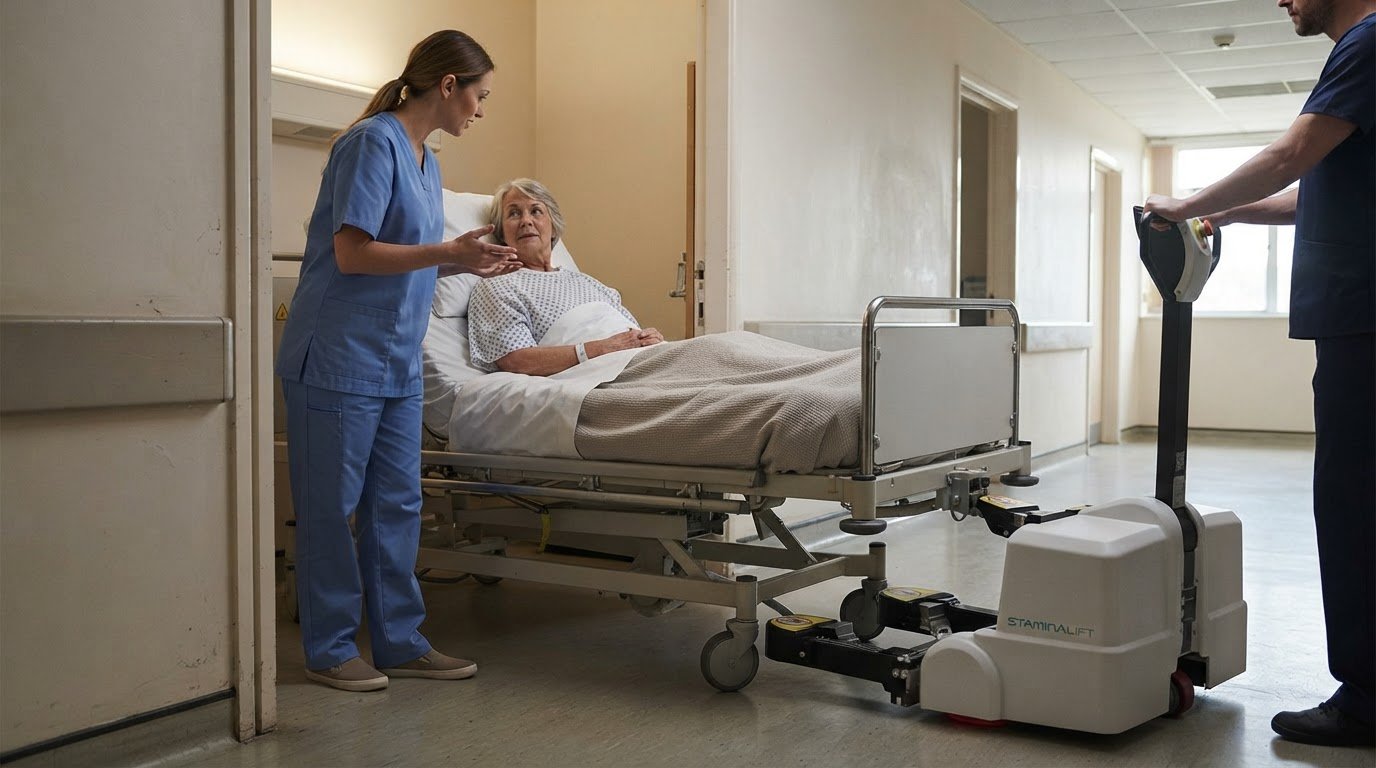
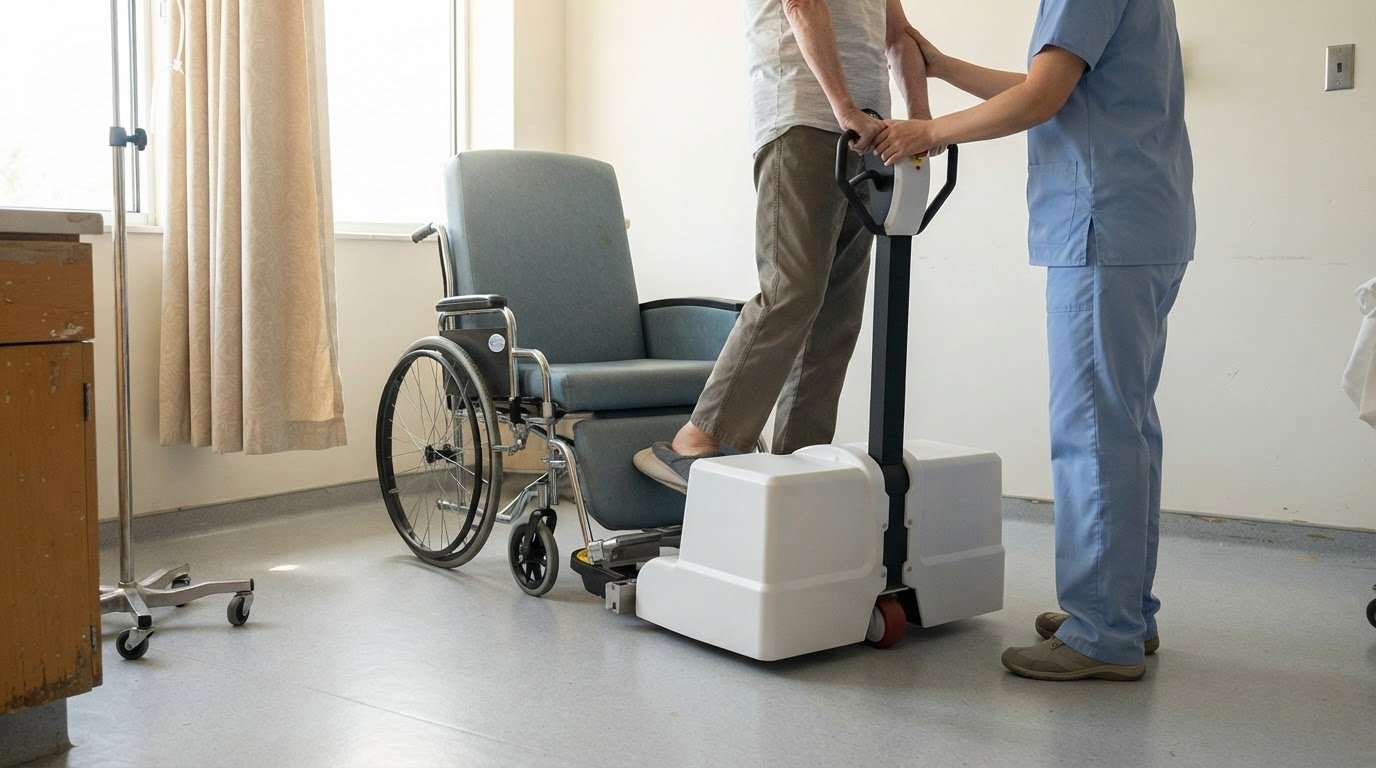
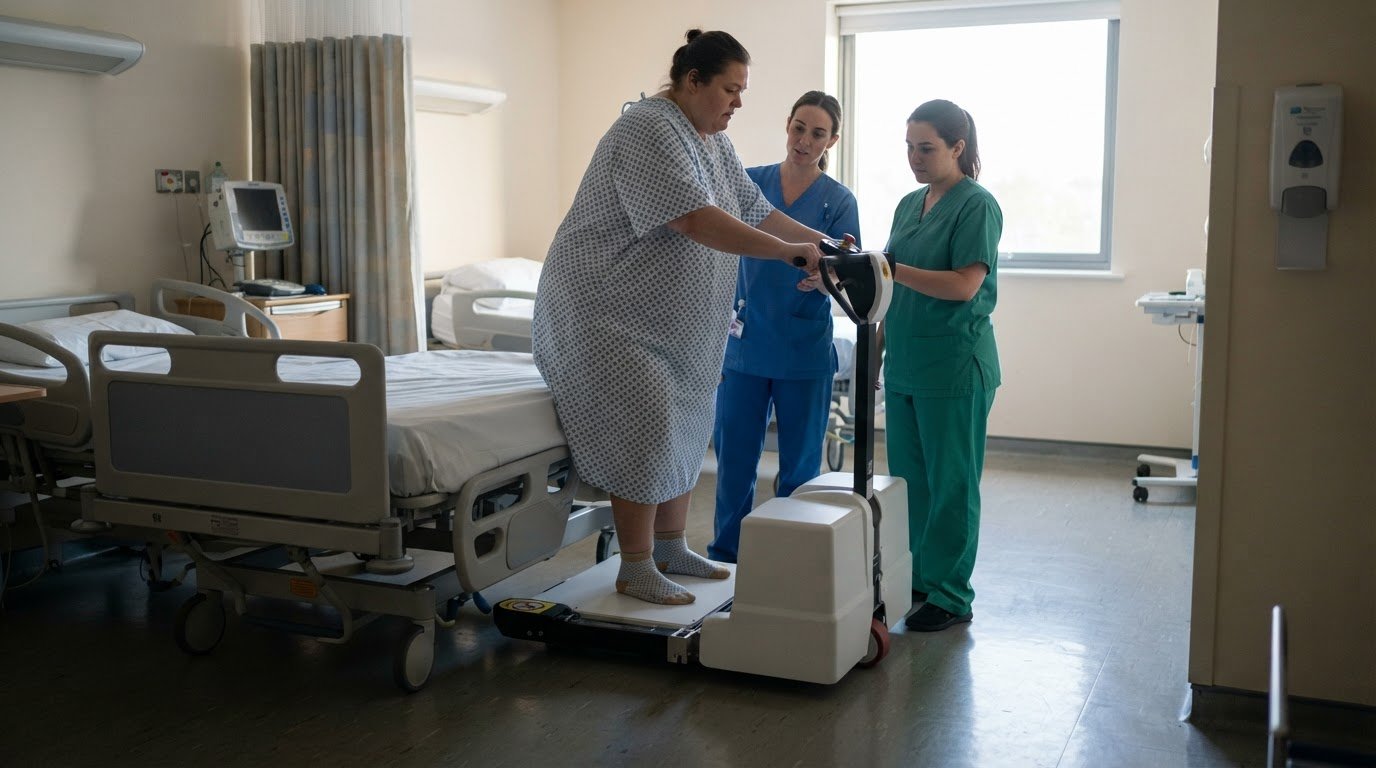
RIHA Industries designs and manufactures patient transfer systems and bed movers for healthcare settings, supporting safer handling of heavy equipment. If a hospital bed is too difficult to move alone, the StaminaLift 2100 Bed Mover may be relevant to moving it with suitable equipment. The StaminaLift Transfer System 5000 and StaminaLift Transfer System 6000 are designed to integrate with existing hospital equipment, while the Easi Rider helps staff move heavy loads.
The right approach depends on the bed, the route and the equipment involved. A bed mover is not a substitute for a safe plan, and patient repositioning still requires appropriate assistance. If you’re considering equipment to support bed movement or patient transfers, contact RIHA Industries to discuss your requirements.
Choose the safest next step
Before committing to a solo move, consider whether the bed, route and available handling method allow controlled movement throughout. If you’re still deciding how to move a hospital bed with one person, use your ability to stop safely as a key measure. A move that requires force, awkward lifting or an uncontrolled turn calls for a different plan.
For healthcare equipment handling, the right equipment can support staff and reduce the physical burden of moving heavy loads. RIHA Industries offers bed movers and patient transfer systems designed for healthcare settings. Whether you’re planning a move or considering equipment for regular handling, the bed and task details will help guide the conversation.
Contact RIHA Industries to discuss your equipment needs, and take the next step with a clearer, safety-focused plan.
Frequently Asked Questions
How do you move a hospital bed out of your home?
Move the bed only after confirming it can travel safely along the planned route. Check the exit path, including the final turn from the hallway through the front door. If the bed is too wide, follow its manual for disassembly rather than forcing it through. Don’t attempt to carry a bed down stairs alone; stop and arrange suitable assistance for that part of the move.
How do you unlock and use the wheels on a hospital bed?
Find the castor brakes and release them according to the bed manufacturer’s instructions. Brake controls can vary, so don’t assume every lever works the same way. Test the bed with a gentle push in a clear space, keeping your hands away from the wheels. If a castor stays locked, wobbles or resists turning, don’t force it; an unreliable wheel can make steering unpredictable.
How do you move a hospital bed through doorways and hallways alone?
Move through a doorway only if the bed fits and you can steer it without forcing the frame. Approach squarely, then make small adjustments rather than attempting a sharp turn in one movement. A hallway corner may require extra clearance beyond the doorway itself. If you can’t see the bed’s edge or maintain control through the turn, pause and get assistance rather than pushing blindly.
What equipment helps one person move a hospital bed?
Suitable options include moving straps, a transport cart for a folded bed, or compatible bed-moving equipment. Each method depends on the bed’s design and the route. RIHA Industries offers the StaminaLift 2100 Bed Mover for moving beds in healthcare settings. Don’t assume any equipment suits every bed or home layout; the mover must be compatible with the bed and the task.
What are the risks of moving a hospital bed alone?
A bed that rolls, catches or tips can cause a fall, strain or impact injury. You may also damage the bed, a wall or a doorway if you can’t control its direction. The risk rises if you need to lift a heavy section, manage stairs or steer around a tight corner. Don’t include a patient in a solo bed move; arrange help for patient handling.
How do you move an electric hospital bed without damaging its motor or cords?
Disconnect the power before preparing the bed, and handle plugs by their body rather than pulling the lead. Keep the cord away from castors, joints and folding sections, where it could become trapped. Use the manufacturer’s instructions for disassembly and transport. Don’t push or lift by the motor, control box or cable; if a component appears loose or damaged, stop before moving the bed.