Powered vs Unpowered Patient Transport: Which Should You Choose
A powered option isn’t automatically safer. The right choice in powered vs unpowered patient transport depends on the patient’s mobility and clinical needs, the load, the route and how often equipment is moved. Powered equipment can assist with heavy or repeated moves; unpowered equipment may suit simpler tasks when staff can manoeuvre it comfortably. Neither replaces clinical care when a patient needs monitoring or treatment during transport.
It’s understandable to focus on the effort involved in moving a patient, but day-to-day handling matters too. Battery charging, equipment size and manoeuvrability all affect how smoothly a system works in a hospital.
This guide explains how to weigh patient needs, hospital workflows, battery requirements and equipment handling when choosing between powered and unpowered options. It also offers a practical way to match equipment to the task.
Table of Contents
Choosing transportation based on stability and mobility
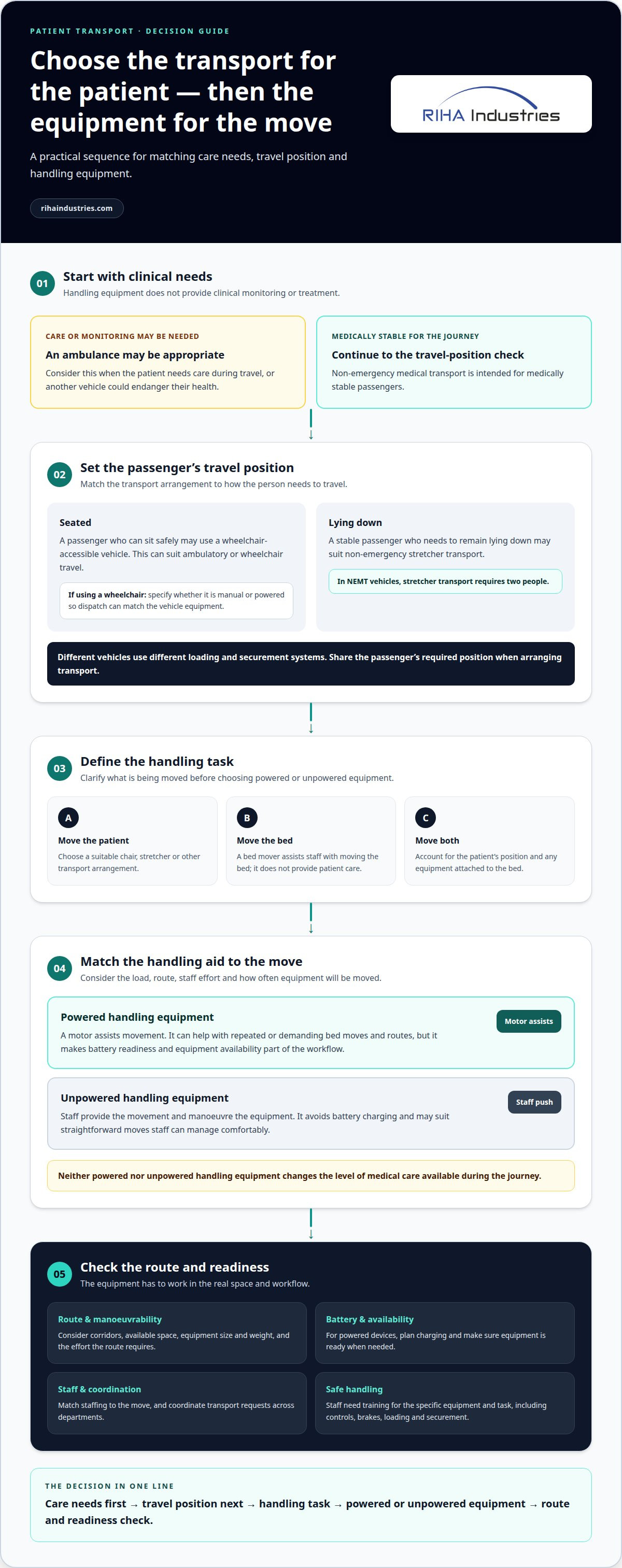
First, separate the patient’s clinical needs from the equipment used to move them. A powered bed mover assists staff in moving a bed, but does not provide clinical monitoring or treatment. A patient who needs care during travel, for example, may require an ambulance rather than routine medical transport. Non-emergency medical transport, by contrast, is intended for medically stable passengers and may include ambulatory, wheelchair-accessible or stretcher transport.
Next, establish how the person will travel. A passenger who can sit safely may use a wheelchair-accessible vehicle, while someone who must remain lying down may need stretcher transport. These vehicles use different loading and securement systems, so tell dispatch the passenger’s required position. If the passenger uses a wheelchair, specify whether it is manual or powered. This helps dispatch match the vehicle’s equipment to the person and chair.
Stability is central to the choice. If a patient needs clinical monitoring or care en route, or another vehicle could endanger their health, an ambulance may be appropriate for a scheduled trip. A stable passenger travelling on a stretcher may instead suit non-emergency stretcher transport. In NEMT vehicles, stretcher transport requires two people. A powered or unpowered handling aid does not change the level of medical care available during the journey.
For an emergency, don’t delay an immediate response to arrange non-emergency transport. In the United States, call 911 for a potentially life-threatening condition, or when unsure whether the situation is an emergency, and follow the dispatcher’s instructions. For a planned transfer, discuss the patient’s stability, mobility, travel position and need for care. Then identify whether the task involves moving the patient, moving a bed, or both. Those steps clarify which transport arrangement and equipment feature matter.
Choose based on the patient’s care needs and position first, then select powered or unpowered equipment for the handling task.
Patient transport within hospitals
Inside a hospital, transport equipment affects patient flow as well as the physical task. The right approach depends on the route, the move and the support the patient needs.
A centralised transport team can work across hospital departments, while a decentralised team usually serves one unit. This affects how staff cover trips to imaging, surgery and other destinations.
Powered transport devices
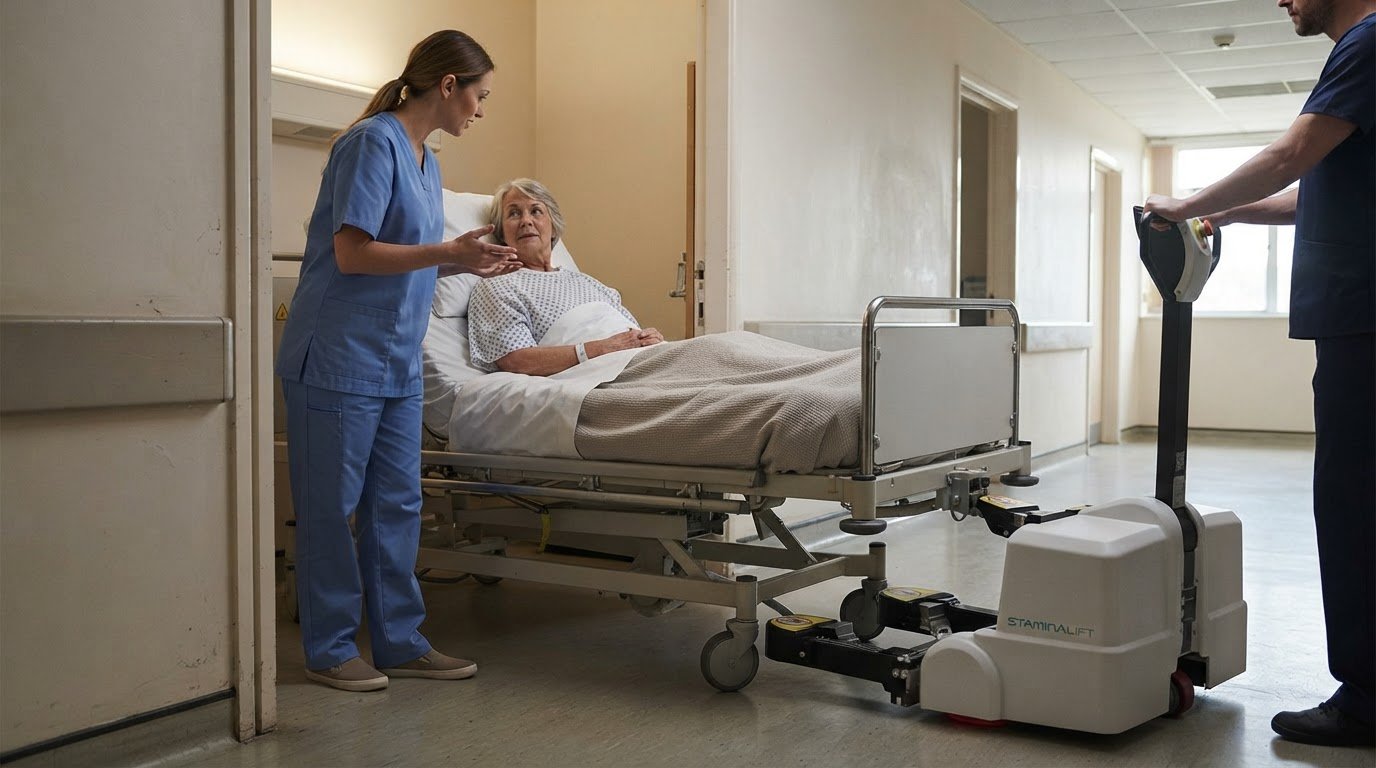
Powered devices use a motor to assist movement, such as moving a patient chair or stretcher through hospital corridors. Unlike unpowered equipment, they use powered controls rather than relying entirely on staff to push. This can help with repeated trips or demanding routes, but makes battery readiness and equipment availability part of the workflow.
Equipment decisions don’t replace clinical planning. A transport ventilator may support respiratory care during an intrahospital move. A study involving 16 critically ill patients reported more stable respiratory support with a transport ventilator than with manual ventilation. Oxygen needs and the patient’s condition remain part of the clinical team’s transport plan.
Unpowered transport devices
Staff push and manoeuvre unpowered chairs and stretchers. These avoid battery charging, but teams still need to account for the effort and coordination each route requires. For a move from a ward to imaging, for example, the patient’s position, equipment attached to the bed and corridor access all affect the task.
Staffing should suit the move. In a centralised model, transporters are trained to work across hospital areas and may take another request while a patient undergoes a scan. In a decentralised model, transporters are assigned to one unit, such as MRI. Hospitals without dedicated transport teams may rely on nurses, taking them away from patient care.
For United States safety standards, the Code of Federal Regulations (CFR) provides federal guidance on ambulance design and equipment. This guidance concerns ambulances, so it should not be treated as a universal specification for every hospital chair, stretcher or transfer device.
There is no single useful price for powered and unpowered transport chairs or stretchers. Cost depends on the specific case and is provided after a quote request; equipment type, configuration and intended use all matter.
Safe use depends on training for the specific equipment and task. Staff need to understand controls, brakes, loading and securement, while hospital teams must coordinate staffing and transport requests. Risks include handling strain, insecure equipment and delays. A delayed transfer can tie up beds and affect patient placement, including waits in emergency departments or post-anaesthesia care units.
Hospitals can use transport-request technology to let medical staff submit requests and transporters respond. Reviewing busy periods helps teams plan staffing and reduce bottlenecks. An MRI scan, for example, can take up to an hour. A centralised transporter may use that time for another transfer instead of waiting in one department.
Battery runtime and recharging
Battery planning affects whether powered equipment is ready for each healthcare transfer. A medical cart used across a hospital may complete repeated trips before returning to a charging point. Actual operating time depends on the equipment and how it is used. Route length, load, stops and powered functions all affect battery demand, so one runtime assumption won’t suit every transport programme.
Consider the whole shift, not just one trip. A cart travelling between a ward, imaging and a treatment area, for example, may be in continuous use with few opportunities to recharge. A computer battery often holds a charge longer than a powered medical-cart battery. That difference matters when planning equipment use across destinations, rather than relying on experience with laptops or other portable devices.
A simple readiness routine makes battery use more predictable. At the start of a shift, staff can check the charge indicator and confirm the equipment is ready for its planned tasks. After a transfer, they can return the cart to its designated charging point when it is not needed. Assigning responsibility for charging during handovers can also reduce uncertainty between teams.
Hot-swap capability changes how teams manage a depleted battery. Staff can replace the battery while powered equipment continues running, avoiding an interruption during the change. This can help when a cart must remain in use. The replacement battery still needs to be charged and available, so the facility’s charging process must support both the active equipment and the spare.
Without hot-swap batteries, a cart with a depleted battery must be plugged in to recharge and remains out of service meanwhile. If a cart is needed to move equipment, for example, staff may need another suitable cart during charging. That workaround depends on equipment availability and how the facility schedules tasks.
Build charging into the equipment programme rather than treating it as an occasional task. Identify where powered carts are commonly used, when they return to a charging point, and who connects them. A clear process helps staff recognise which units are ready and which are charging. For sites operating across different states or regions, consistent shift procedures can support the same approach at each facility.
Choose powered equipment by matching its battery arrangement to the work pattern. Frequent transfers, long routes and limited charging access place different demands on a cart than occasional short moves. Consider whether hot-swapping suits the workflow and whether charging points are practical near the usual parking area. Battery runtime and recharging do not apply to unpowered equipment, but staff still need a reliable storage and availability routine.
Cart ergonomics and manoeuvrability
Cart size and weight affect how easily staff can work beside a patient. Non-powered medical carts are usually smaller than powered carts, which can make it easier to bring them close to a bedside. In a treatment room with limited clearance, that smaller footprint may help staff position equipment without obstructing access to the patient or nearby devices.
Powered carts provide motorised assistance, but are almost always heavier than non-powered carts. Staff also need more force to wheel them along hallways. On a route from a ward to an imaging room, for instance, turns, doorways and corridor traffic all affect manoeuvrability. A powered unit may assist with movement, but its weight still matters when staff guide it.
Compare equipment in the spaces where it will be used. A cart that moves easily along a wide corridor may be harder to position beside a bed or around treatment-room furniture. Map the route from storage to the bedside, noting tight turns, thresholds and parking space. These observations help match cart dimensions and handling to actual hospital work.
Stability also depends on how a cart is loaded and positioned. Keep equipment organised so items do not shift during a move, and avoid blocking handles or controls. Staff moving a cart between a treatment area and a patient bed, for example, need a clear view of the route and enough room to stop and reposition it. Follow the equipment’s operating instructions.
Handle design and working height affect posture during repeated tasks. Adjustable-height work surfaces can make medical carts less physically demanding to use. Staff preparing devices at a bedside, for example, can set the surface to a suitable height instead of repeatedly bending over a fixed-height cart. This supports a more comfortable working position during setup and use.
Before choosing, assess a typical move from start to finish. Note whether staff need to push the cart along a long hallway, turn into a narrow room or bring it beside a bed. Then consider who moves it, how often the task occurs and whether the route changes between treatment and discharge areas. These practical details reveal the handling demands that matter most.
Bedside access: Check whether the cart fits beside the bed without obstructing staff or patient access.
Route handling: Consider the effort needed to move it through corridors, doors and turns.
Work height: Look for an adjustable surface when staff use the cart at different positions.
Parking: Identify a stable location that keeps the cart accessible without blocking the clinical space.
In a small treatment room, a compact unpowered cart may be easier to position. For longer hallway moves, weigh a powered cart’s motor assistance against its weight. Match the device to the route, workspace and handling task rather than choosing by power alone.
What types of powered and unpowered patient transport devices are available?
Hospitals use different devices to move patients, beds and equipment. The key distinction is the task: a wheelchair or stretcher supports patient movement, while a bed mover or tug assists with larger equipment. Powered and unpowered options differ in how movement is supplied. Match the device category to the transfer instead of treating every cart as interchangeable.
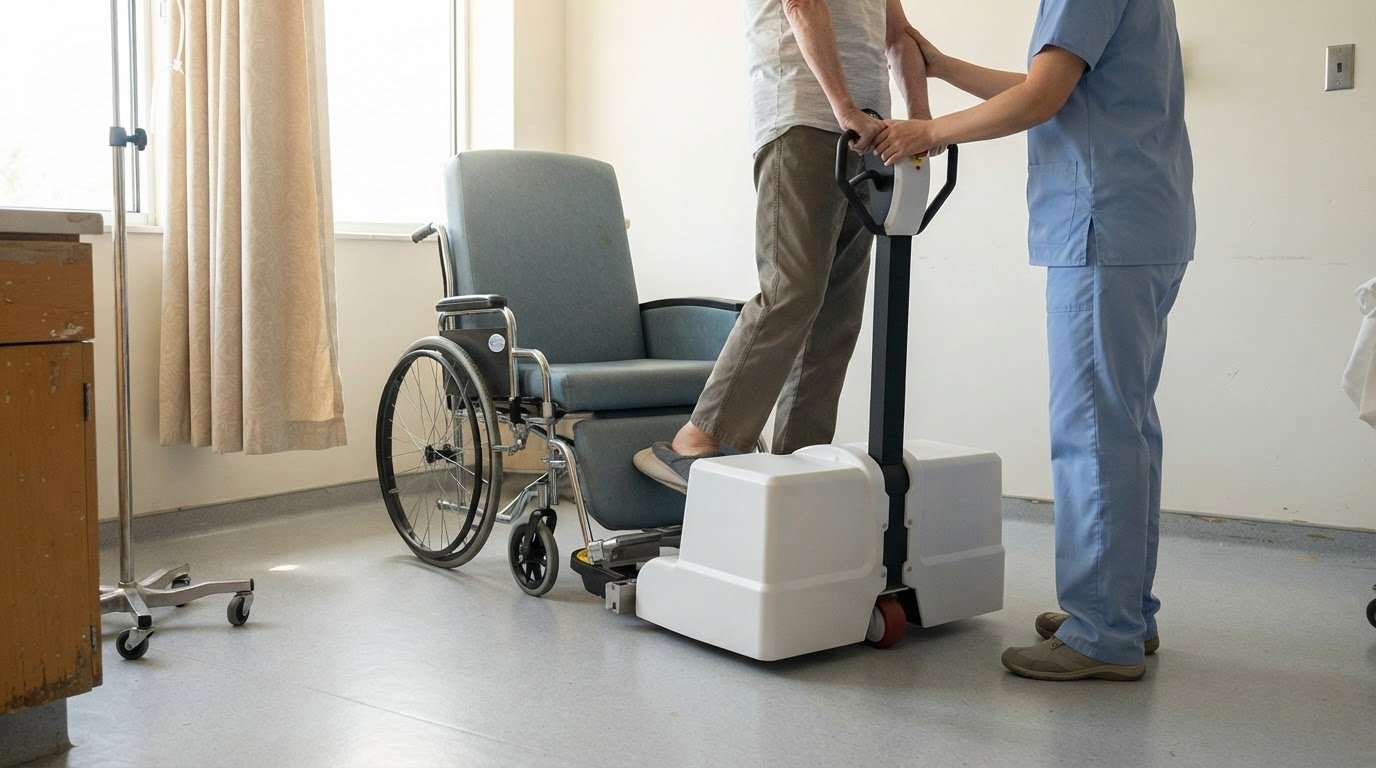
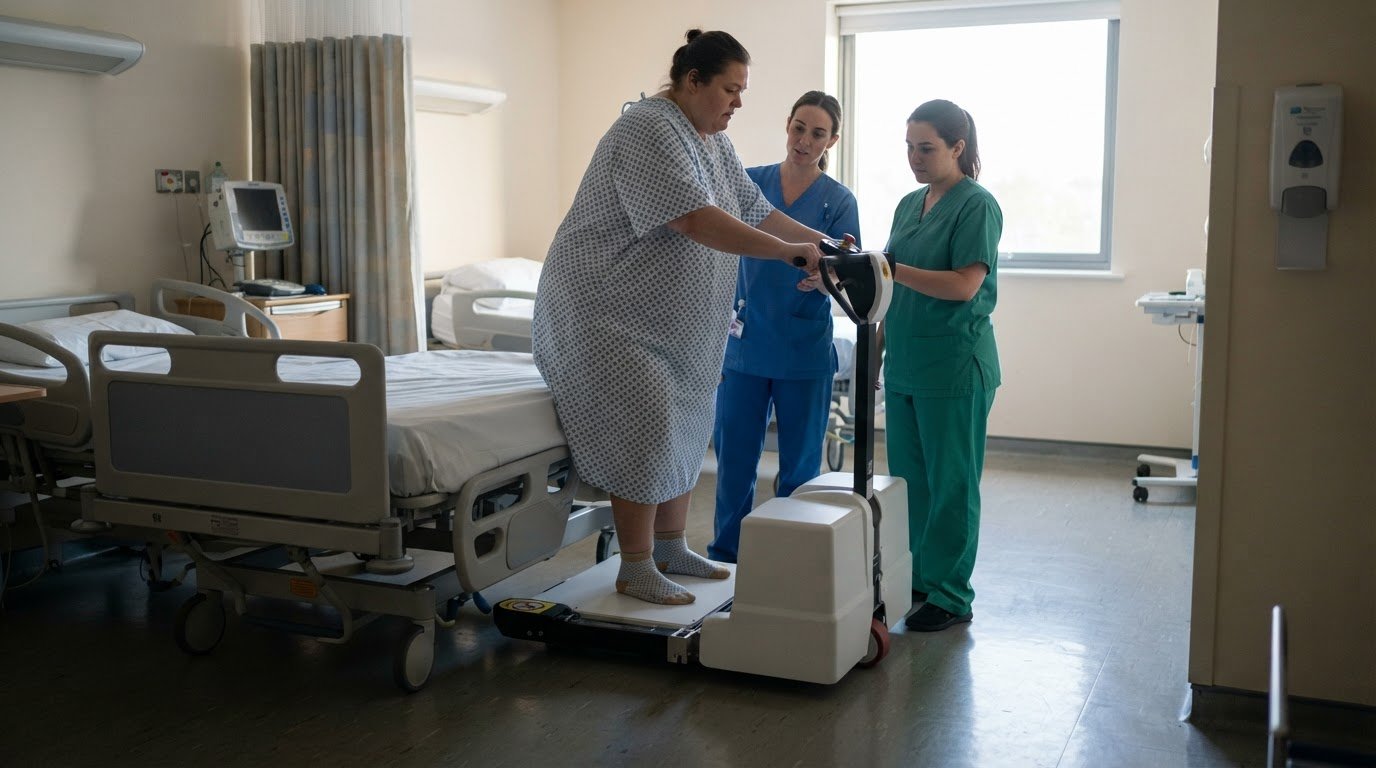
Powered patient-handling equipment includes motor-assisted transfer systems and bed movers. A transfer system supports moving a patient between compatible surfaces, while a bed mover assists staff in moving a hospital bed. Powered tugs serve another purpose: moving heavy loads around a facility. These devices address handling demands but do not provide clinical monitoring or treatment during transport.
Unpowered devices rely on staff to supply the movement. Common types include manual wheelchairs, stretchers and transport carts. A wheelchair suits a passenger travelling seated; a stretcher supports travel lying down. A manual cart can carry equipment alongside a transfer. Each device has a distinct role, so a cart should not be mistaken for equipment designed to move a patient.
Transfer systems: Powered or unpowered systems can help move a patient between surfaces. Select based on the transfer task and compatibility with the equipment involved.
Bed movers: Powered bed movers assist with relocating beds. Unpowered movement relies on staff handling the bed directly.
Wheelchairs: Manual and powered wheelchairs support seated travel. Tell transport dispatch which wheelchair type the passenger uses.
Stretchers: Stretcher-equipped transport supports a passenger travelling lying down. It differs from a wheelchair-accessible vehicle’s loading and securement arrangements.
Tugs: Powered tugs assist with moving heavy loads. They’re not substitutes for patient transport devices.
A ward transfer may require a wheelchair for a passenger who can remain seated, while relocating a bed calls for a bed mover. If a patient must travel lying down, the transport arrangement needs to accommodate a stretcher. Identifying the passenger’s position and the object being moved helps staff choose the right equipment category.
Consider the full workflow, too. A hospital may need one device for bedside transfers and another for moving beds or equipment along corridors. Powered systems assist with movement but require battery charging and manoeuvrability to be considered. Unpowered equipment avoids recharging, while staff provide the force needed to move it. The best match depends on the task, route and handling demands.
For a hospital reviewing transfer systems or bed-moving equipment, discuss your patient-transfer requirements as a practical next step.
RIHA Industries
RIHA Industries can help healthcare teams connect their transport challenges with equipment designed for patient transfers and bed moving. If your assessment points to powered assistance for moving beds or transferring patients, its range includes the StaminaLift Transfer System 5000, StaminaLift Transfer System 6000 and StaminaLift 2100 Bed Mover. The Easi Rider is another option for moving heavy loads.
The right fit depends on the task, the existing hospital equipment and how staff move patients or beds through the facility. Discuss these factors with RIHA Industries when you’re considering equipment for your workflow. Contact RIHA Industries to discuss your patient transport requirements.
Make the next move with confidence
A decision about powered vs unpowered patient transport should reflect how your team works, not just equipment features. Consider which handling tasks shape staff workflows and where equipment needs to fit within the facility. These priorities help turn an equipment discussion into a practical plan.
As operational needs change, revisit powered vs unpowered patient transport choices with those priorities in mind. RIHA Industries can discuss how its patient transfer systems and bed movers fit your requirements.
Contact RIHA Industries to discuss your requirements and take the next step with confidence.
Frequently Asked Questions
What Is Patient Transport?
Patient transport means moving a person between care locations, such as a hospital ward, imaging department or discharge area. Depending on the patient’s mobility and position, this may involve walking assistance, a wheelchair, a bed or a stretcher. Hospital transport may also require staff to move equipment alongside the patient. The term describes the task, not a particular vehicle or device.
What is the difference between powered and unpowered patient transport?
In powered vs unpowered patient transport, the difference is how movement is supplied: powered equipment uses a motor or battery to assist, while staff move unpowered equipment. A powered bed mover, for example, assists with relocating a bed, while staff push an unpowered transport chair. These categories describe equipment, not the level of medical care. Arrange clinical support separately when a patient needs care in transit.
What are the weight capacities and battery ranges of powered patient transport devices?
There is no single weight capacity or battery range for powered transport devices; both depend on the model and its intended task. Check the device’s rated capacity for the specific load, and plan battery use around route length, load, frequency of operation and charging opportunities. Repeated trips between wards, for instance, place different demands on a powered device than occasional movement within one department.
What are the advantages and disadvantages of powered patient transport compared with manual transport?
Powered equipment can assist with demanding or repeated moves, while manual equipment avoids reliance on a charged battery. The practical trade-off is operational: powered devices need a charging and readiness routine, while manual devices require staff capacity for the physical task. A facility that frequently relocates beds may value powered assistance, while a compact room may favour simpler equipment that is easy to position.
How do hospitals and care facilities choose between powered and unpowered patient transport?
Hospitals comparing powered vs unpowered patient transport can start by mapping a common task, such as moving a bed from a ward to a procedure room. Record the load, route, turns, bedside clearance, frequency and staff involved. Then compare devices against that workflow, including storage and charging arrangements for powered options. A practical assessment should also account for the patient’s position and whether clinical care is needed during transport.