
The Evolution of Bed Transport System Trends in Australian Hospitals for 2026
Updated: Aug 4
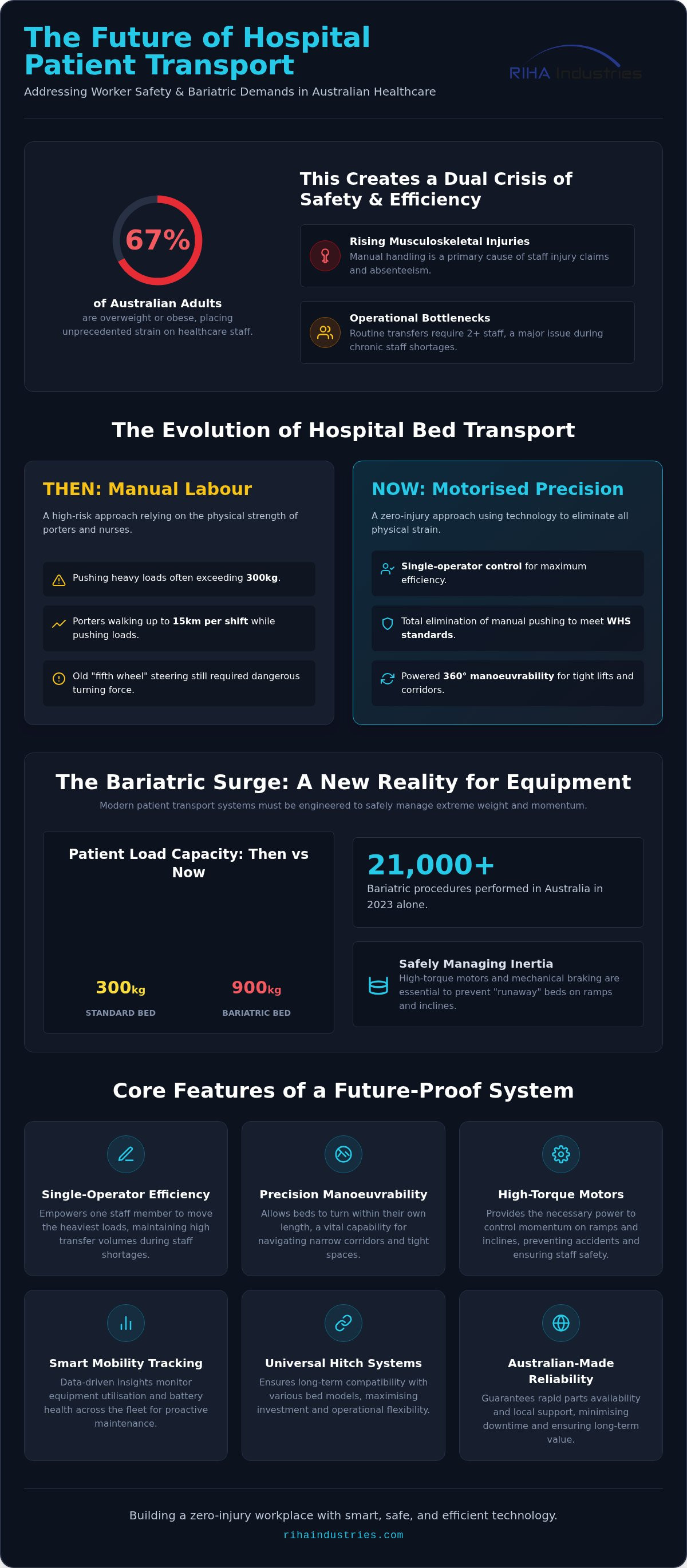
With 67% of Australian adults now classified as overweight or obese, the physical strain on our frontline healthcare workers has reached a critical breaking point. You likely see the impact every day through rising musculoskeletal injuries and the constant struggle to coordinate two or more staff members for a single routine transfer. It's a heavy burden to carry, both literally and operationally, especially when chronic staff shortages are already stretching your teams to their limits.
We believe that protecting your staff should never come at the cost of operational speed. This article explores how an advanced bed transport system hospital solution can transform your facility into a zero-injury workplace by empowering a single operator to move even the heaviest bariatric loads with total control. You'll discover how motorised technology is solving the dual crisis of worker safety and efficiency, ensuring your equipment is ready for the bariatric demands of 2026. We'll preview the latest trends in motorised manoeuvrability and the regulatory shifts that are helping Australian hospitals future-proof their wards while keeping their most valuable asset, their people, safe and supported.
Table of Contents
The Evolution of Hospital Bed Transport Systems in Australia
The landscape of patient transport systems in Australia is undergoing a fundamental shift. For decades, moving a patient from the emergency department to radiology was a purely manual task, relying on the physical strength of porters and nurses. Today, a modern bed transport system hospital facility is defined by its transition to integrated motorised solutions. These systems move beyond simple wheels, instead using sophisticated "tug and hitch" mechanisms that take the entire weight of the load off the operator. What was once considered a luxury for high-budget facilities has now become a critical component of Work Health and Safety (WHS) compliance.
Facility managers are increasingly moving away from passive equipment. The focus has shifted toward active, motorised units that can handle the sheer mass of modern hospital beds without requiring staff to exert dangerous levels of force. This evolution is driven by a need to protect workers while maintaining the flow of a high-pressure clinical environment. As we look toward 2026, the standard for a bed transport system hospital is no longer just about movement; it's about precision, safety, and the total elimination of manual pushing.
From Manual Labour to Motorised Assistance
The physical toll on hospital staff is immense. Porters often walk up to 15km per shift, frequently while pushing loads that exceed 300kg. This constant strain is why manual handling is increasingly viewed as a prohibited risk in modern facility management. To solve this, hospitals are adopting battery-powered machines like the StaminaLift 2100 Bed Mover. These units provide the necessary torque to initiate movement and maintain speed, allowing staff to walk naturally without the risk of shoulder or back strain. By automating the heavy lifting, hospitals can significantly reduce workplace injury claims and improve staff retention during critical labour shortages.
Why Traditional Steering Assistance is No Longer Sufficient
Many older beds rely on a "fifth wheel" design for steering assistance. While this was adequate for lighter patient loads in the past, it fails to meet the demands of modern bariatric care. A fifth wheel still requires the operator to provide the force for turning, which becomes nearly impossible when a bed weighs several hundred kilograms. Contemporary standards now prioritise 360-degree manoeuvrability. This allows a single operator to turn a bed within its own length, a vital capability when navigating the tight lifts and narrow corridors often found in older Australian hospital architectures. Modern motorised systems provide the power to steer and brake automatically, ensuring the operator stays in total control regardless of the patient's weight or the floor's incline.
Addressing the Bariatric Surge: A Critical Patient Transfer Trend
The rising prevalence of bariatric admissions is no longer an outlier; it's a daily reality for Australian acute care facilities. In 2023 alone, Australia recorded over 21,000 bariatric procedures, a figure that continues to climb as our population demographics shift. With recent data showing that 67% of adults are now classified as overweight or obese, the physical requirements for a bed transport system hospital have fundamentally changed. Moving a patient weighing 200kg or more creates immense kinetic energy. Once that mass is in motion, stopping it safely requires more than just human strength. It demands mechanical intervention designed to manage extreme inertia and momentum.
High-torque motors are essential for preventing "runaway" incidents, particularly when navigating the ramps and inclines common in hospital loading docks or between wings. Without motorised assistance, a 500kg load on a slight gradient can quickly become uncontrollable. By 2026, a bariatric-ready bed transport system hospital solution will be a standard requirement rather than an optional upgrade, as facilities prioritise the safety of both patients and the staff tasked with their care.
The Growing Need for High-Capacity Mover Systems
Standard bed movers often fail when faced with the sheer weight of modern bariatric beds, which can reach up to 900kg when fully loaded. This is where specialised equipment like the StaminaLift Transfer System 6000 becomes indispensable. It's engineered to move nearly one tonne with precision, utilising a patented universal hitch that secures the bed firmly. Key safety features include:
Automatic fail-safe braking to prevent unintended movement on slopes or ramps.
Locking jaws that create a rigid, secure connection to the bed frame for stable transport.
Variable speed control for delicate manoeuvring in crowded clinical environments.
These technical components ensure the bed remains under total control, even during emergency stops, providing peace of mind for the operator and safety for the patient.
Overcoming Incline and Ramp Challenges
Navigating a 7-degree incline with a bariatric patient is one of the most dangerous tasks a porter can perform. Manual handling in these scenarios is a recipe for disaster. Powered systems are designed to maintain a constant, controlled speed regardless of the patient's weight or the steepness of the ramp. Furthermore, the sheer pressure of nearly a tonne concentrated on small caster wheels can cause permanent damage to hospital flooring. Modern movers mitigate this by distributing weight through wider, non-marking drive wheels that offer superior grip without leaving scuffs or indentations on expensive vinyl surfaces.
Implementing the right technology allows your team to focus on patient comfort rather than physical exertion. If you're looking to upgrade your facility's capabilities, you might consider how the StaminaLift Transfer System 6000 can handle your most demanding bariatric transfers.
Evidence from the field supports this investment. A major South Australian hospital documented a complete elimination of bed-moving injuries, reducing the rate from 20% to zero after adopting motorised transport. This isn't just a win for safety; it's a critical strategy for staff retention. When workers feel protected from the physical toll of their roles, they're far less likely to seek employment elsewhere or succumb to burnout. Protecting the health of your existing team is far more cost-effective than the constant cycle of recruiting and training new staff to fill roles vacated due to injury.
Reducing the Physical Burden on Nursing and Portering Teams
The most dangerous moment of any patient transfer is the initial "push-start" required to overcome inertia. This sudden burst of exertion is a primary cause of back and shoulder injuries. Modern ergonomic patient transfer solutions remove this risk by using motorised drive systems to handle the heavy lifting. Implementing a motorised bed transport system hospital wide ensures that intuitive joystick controls and ergonomic handles allow staff to navigate corridors with a light touch, preventing the repetitive strain that often leads to chronic pain. These systems ensure that the physical height or strength of the operator is no longer a limiting factor in patient mobility.
Combatting Workplace Burnout Through Better Equipment
Burnout often stems from a sense of being physically overwhelmed by daily tasks. Providing high-quality tools creates a psychological buffer, making the workday feel more manageable and less daunting. This technology also ensures a more inclusive workplace. It enables older staff members or those with smaller physical frames to perform heavy transfers with total confidence and zero risk of injury. The StaminaLift Transfer System 5000 empowers a single operator to move 95% of all hospital beds with total safety and ease. When an organisation invests in such equipment, it sends a powerful message that the health and well-being of its people are paramount, which is a key driver in long-term staff loyalty.
Technological Integration: The Rise of Smart Bed Movers
The evolution of the bed transport system hospital managers rely on is increasingly defined by digital intelligence. As we enter 2026, the trend of "Smart Mobility" is moving from high-tech operating theatres into the corridors and maintenance wards. By integrating IoT capabilities, facility managers can now track equipment utilisation and monitor battery health across their entire fleet in real-time. This data-driven approach ensures that no unit is left idle while others are overtaxed, allowing for a more balanced and efficient fleet management strategy. It also provides a transparent audit trail for safety compliance, proving that equipment is maintained and operated within its designed parameters.
Reliability in a high-stakes environment is non-negotiable. Modern systems utilise advanced connectivity to provide a clear window into the machine's operational status. This shift toward intelligent hardware ensures that a bed transport system hospital doesn't just assist with physical labour; it acts as a proactive partner in facility logistics. Using these insights, hospitals can optimise their portering routes and reduce wait times for patient transfers, directly improving the patient experience and ward throughput.
Bluetooth Diagnostics and Battery Management
Modern equipment now features sophisticated diagnostics to ensure maximum uptime. The StaminaLift app allows supervisors to monitor charging cycles and total battery life via Bluetooth, ensuring every unit is ready for a full shift. This visibility enables predictive maintenance; you can identify specific training needs by reviewing usage history or schedule a service before a component fails. Upgrading to lithium battery technology has provided a significant 20% boost in performance compared to traditional lead-acid alternatives. This ensures that even the longest shifts in high-volume Australian hospitals are handled without the risk of power loss during a critical transfer.
Precision Manoeuvrability in Confined Spaces
Precision in confined spaces remains a top priority for Australian facilities. Standard hospital lifts and older ward layouts leave very little room for error when moving large beds. A true 360-degree turning radius is essential, allowing a bed to pivot within its own length without requiring extra clearance. Many decision-makers worry that such power comes with a large footprint, but contemporary designs are remarkably compact. You can easily overcome the common myth that bed movers for narrow hospital corridors are too bulky to be practical. These units often feature under-bed docking designs that eliminate tripping hazards and keep the overall profile slim.
Operational speed is further enhanced by patented hitch systems that offer universal compatibility with 95% of global bed brands. The "Connect and Lock" jaw system allows for a hands-free connection, securing the load in seconds without requiring the operator to bend or strain. This level of technological integration ensures that your facility is not just moving patients, but doing so with the highest degree of technical precision. To see how these smart features can integrate into your facility, explore the range of solutions at RIHA Industries.
Choosing a Future-Proof Bed Transport Solution for Your Facility
Selecting the right bed transport system hospital administrators choose depends on a thorough understanding of their specific clinical environment. A future-proof solution is one that doesn't just meet current needs but anticipates the bariatric and staffing challenges of 2026. This process begins with a comprehensive audit of your existing fleet. You must ensure any new equipment features a universal hitch system capable of securing 95% of global bed brands, preventing the need for multiple, incompatible movers. It's also vital to evaluate the architectural constraints of your facility, such as the gradient of ramps and the dimensions of your oldest lifts, to ensure your chosen mover provides the necessary 360-degree manoeuvrability.
When calculating the value of this investment, look beyond the upfront cost. Evaluating the hospital bed mover price against the potential for long-term injury claims is essential for a sound business case. A single back injury can cost a facility tens of thousands of dollars in medical expenses, lost time, and increased insurance premiums. By contrast, a motorised mover is a one-time investment that protects your staff for years, providing a clear and measurable return on investment through reduced WorkCover claims and improved staff retention.
Why Australian-Made Engineering Leads the Global Market
Choosing Australian-made equipment provides a level of reliability that international suppliers often struggle to match. By engaging directly with the manufacturer, RIHA Industries, you gain the advantage of direct technical support and custom engineering. We produce our equipment in Edinburgh North, South Australia, which allows for 24-hour parts shipping and avoids the delays of global supply chains. This local presence also enables us to tailor hitches for specific theatre tables or specialised trolleys, ensuring your bed transport system hospital wide is perfectly integrated and ready for any clinical requirement.
Implementing a Safe Patient Handling Programme
A successful transition to motorised mobility requires a shift in workplace culture. Moving from a "manual first" to a "motorised first" approach ensures that staff naturally reach for the right tools before any physical strain occurs. This culture is supported by formal training and certification programmes that empower porters and nurses to operate equipment with total confidence. To maintain this high standard of safety, your facility should adhere to regular preventative maintenance schedules every six to twelve months. This proactive approach keeps your fleet in peak condition, ensuring OHS compliance and providing your team with the reliable support they deserve.
Future-Proofing Your Facility for the Next Generation of Patient Care
As Australian healthcare moves toward 2026, the transition from manual handling to motorised precision is no longer just a trend; it's a fundamental requirement for operational safety. By prioritising a modern bed transport system hospital wide, you address the critical intersection of rising bariatric patient weights and chronic staff shortages. These advanced solutions empower your team to perform heavy transfers with single-operator efficiency, ensuring that your facility remains agile and your workforce stays healthy and supported.
Choosing the right equipment means looking for proven reliability and local support. RIHA Industries provides FDA-registered and Australian-made quality, backed by national service coverage and 24-hour parts shipping from our South Australian facility. Our documented success in reducing staff manual handling injuries demonstrates that the right engineering can solve your most complex physical challenges. We're here to help you build a safer, more efficient workplace that's ready for whatever the future of healthcare holds.
In addition to healthcare-specific safety, staying updated on a wider range of global news and diverse developments is beneficial for any professional; to explore more informative articles, click here.
Discover the full range of Australian-made StaminaLift bed movers at RIHA Industries and take the first step toward a zero-injury workplace today.
Frequently Asked Questions
What is a bed transport system in a hospital setting?
A bed transport system is a specialised motorised unit designed to move hospital beds and stretchers with minimal physical exertion. Unlike manual equipment, an integrated bed transport system hospital managers deploy uses battery power to handle heavy loads, allowing staff to guide rather than push. This technology effectively removes the risk of back and shoulder strain during routine patient transfers.
Can a single person operate a motorised hospital bed mover safely?
Yes, these machines are specifically engineered to enable one staff member to manage transfers that would traditionally require two or more porters. By mechanising the force needed to push, steer, and brake, the mover allows a single operator to stay in total control of the load. This efficiency is vital for maintaining ward throughput when staffing levels are stretched.
Are motorised bed movers compatible with all types of hospital beds?
Most advanced models feature universal hitching systems that are compatible with approximately 95% of global hospital bed brands. These patented jaws can securely grip various frame types, including stretchers and specialised theatre tables. This universal compatibility ensures that your facility doesn't need multiple different movers, which helps to reduce equipment clutter in storage areas.
How much weight can a heavy-duty bariatric bed transport system handle?
High-capacity movers are capable of moving loads weighing up to 900kg with precision. This capacity is essential for safely managing bariatric patients who require heavy specialised beds and clinical equipment. These heavy-duty systems provide the necessary torque to initiate movement and the braking power to stop nearly one tonne of mass safely on inclines.
How do motorised bed movers improve hospital porter efficiency?
These tools improve efficiency by allowing porters to complete more transfers in less time without the risk of fatigue. Because a single operator can handle any bed, there's no need to wait for a second staff member to assist with heavy or bariatric loads. This autonomy reduces wait times and ensures that patient transfers happen exactly when they're required.
What safety features should I look for in a hospital bed transport system?
You should prioritise features like automatic fail-safe braking, emergency stop buttons, and intuitive joystick controls. A high-quality bed transport system hospital solution should also offer a 360-degree turning radius to ensure total control in confined spaces. These features work together to prevent runaway incidents and protect both the operator and the patient from accidental collisions.
Is staff training required for operating motorised bed movers?
Yes, while the controls are designed to be intuitive, formal training is a key component of a successful safe patient handling programme. Training ensures that staff understand how to use the hitching mechanism correctly and how to navigate ramps safely. Certification programmes help build confidence among your team, ensuring the equipment is used to its full potential.
How does a bed mover help in narrow hospital corridors and lifts?
Compact motorised movers are designed with a zero-degree turning circle, allowing them to pivot a bed within its own length. This level of manoeuvrability is essential for navigating the narrow corridors and small lifts found in many older Australian facilities. By using a motorised mover, staff can steer with precision, avoiding the wall and doorframe damage often caused by manual pushing.


